How Security Doors Protect Homes Against Modern Burglary Risks
Security doors protect homes against modern burglary risks by putting... Read more →

Home » Uncategorized » Security Door Buying Guide: Features To Check Before Installation
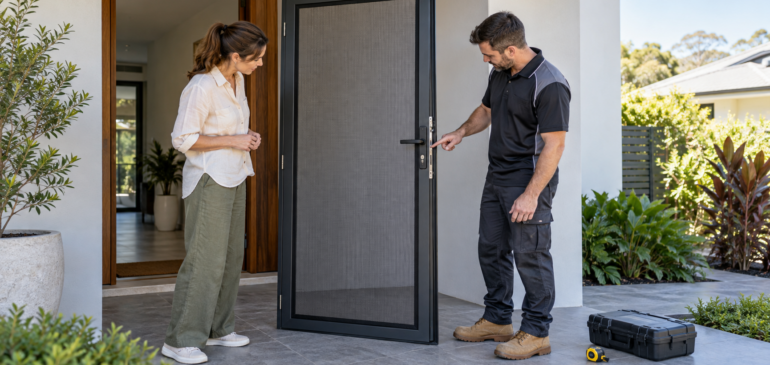
Most people shopping for a security door don’t know what to check beyond price and appearance. Two doors can look nearly the same and still perform completely differently once someone tries to force their way in.
We’re Enfant Terrible Shop, and we install these doors daily across Brisbane. Those daily installs have shown us what holds up and what fails under real pressure.
This security door buying guide walks you through exactly what to look for. The guide covers mesh strength, lock quality, and the certification that proves a lab has tested the door. We’ll also cover the installation details that decide how those features perform once the door is on your frame.
Not every security door on the market earns its price tag. Some doors hold up against a real forced entry attempt, and some just look like they would.
Knowing what separates a strong door from a weak one starts with checking the right features before you buy. Here’s what to check first.
Checking these three features narrows down your range of options fast. Once you’ve confirmed all three, the shortlist of real options gets much smaller.
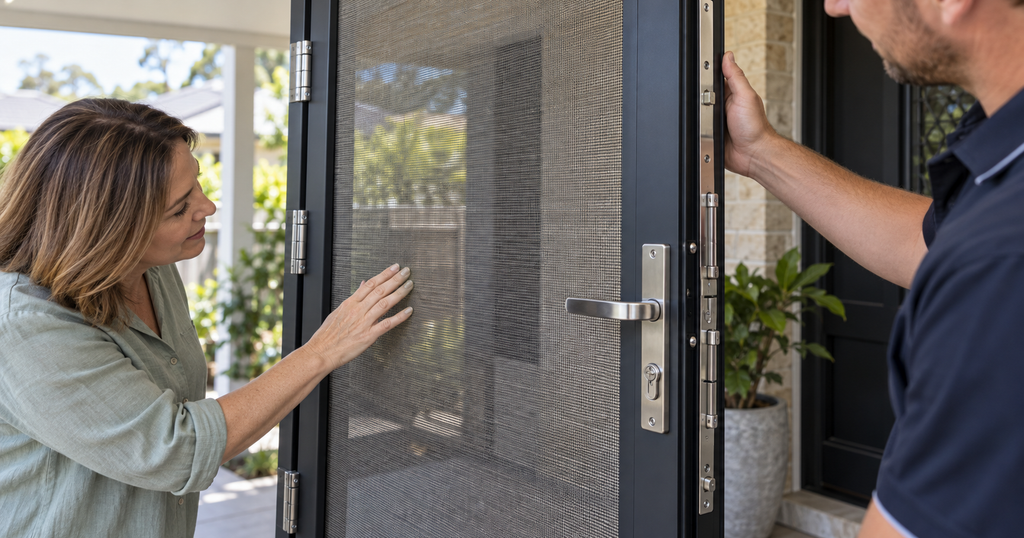
The right security door depends on who lives in the home and where the home sits. A renter in a unit block and a family with young kids need different locking heights and fixing methods.
Renters usually need landlord approval before any door goes in, since installation fixes the screen into the existing frame. A removable security screen suits renters well because the whole unit can come down and travel with you when you move.
Removability doesn’t lower the bar on testing. AS 5039.1:2023 covers removable screens alongside hinged, sliding, and fixed ones, so a removable unit can earn the same compliance label.
Some removable products on the market skip that testing, though. Ask the supplier for the label and test results on a removable screen, exactly as you would for a permanent door.
Original timber frames need specific fixing methods to keep the heritage character intact. A custom-made frame can accommodate the existing structure without requiring cuts or unnecessary changes to the original woodwork.
Households with kids or pets need a door that puts daily safety first, alongside protection from intruders. A family-safe setup starts with locking height. Placing locks higher on the frame keeps curious hands away and lowers the risk of an accidental lockout.
A keyless entry option removes the worry of lost keys altogether, especially with kids who misplace them constantly. Pinch-resistant hinges also protect small fingers during everyday use, a real plus for households with toddlers.
Ground-floor units and homes on busy streets face a higher opportunistic break-in risk simply because access is easier. A visible, compliant security door acts as a deterrent before anyone even attempts entry.
Corner blocks and busy neighbourhood streets benefit from reinforced frames and higher-grade mesh as a baseline. Once you know which household type fits yours, the next step is checking what the door itself is made of.
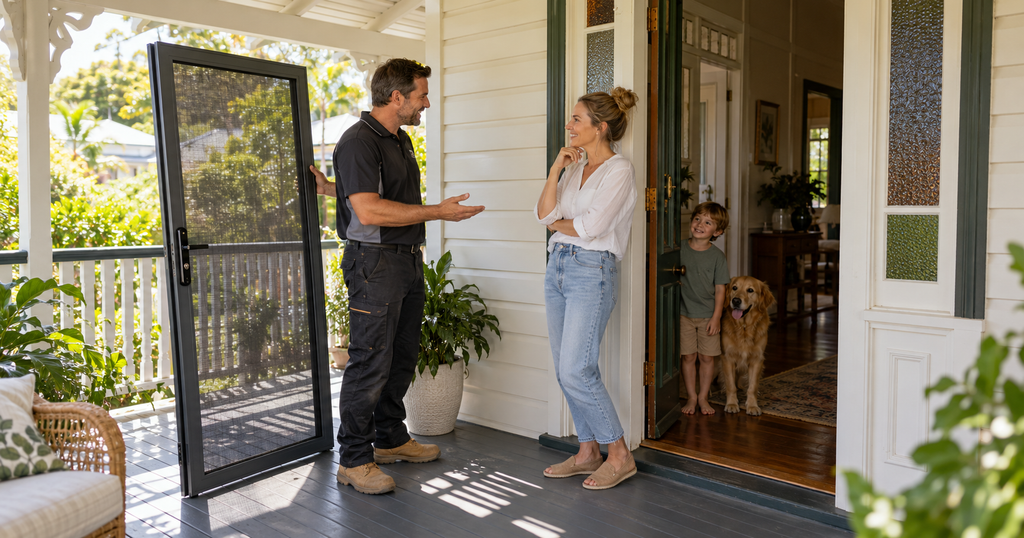
Security screen doors pass forced-entry testing under the Australian Standard, while barrier doors skip that testing entirely. Both types often sit side by side in a showroom and look almost identical.
Barrier doors, sometimes sold as safety doors, might survive a light knock. But a barrier door won’t stop someone determined to get in.
Mesh tensile strength, aperture size, and how the mesh attaches to the frame separate a tested door from a barrier door. The compliance label is the quickest way to spot the difference between a tested door and an untested one.
Yes, marine-grade 316 stainless steel mesh resists cutting, pulling, and impact better than aluminium grilles or fibreglass alternatives. But the mesh itself is only part of the security system.
To meet the relevant standard, the entire screen goes through the tests listed by the National Security Screen Association, including knife shear, jemmy, probe, corrosion, pull, and impact tests.
The test results then determine the screen’s security level rating, either SL100 or SL200. Both levels face the same full set of tests, and the rating comes from the impact test result.
An SL100 screen withstands five impacts of 100 joules each, while an SL200 screen withstands five impacts of 200 joules. SL200 is worth considering for front doors and ground-floor entries, where a kick or shoulder charge is most likely.
These testing requirements also make price comparisons more useful. In one case we came across, a Brisbane supplier quoted $400 under everyone else. The mesh turned out to be half the thickness, and a half-thickness panel barely slows a forced entry.
A tested security screen stops kicks, shoulder charges, levering, cutting, pulling, and probing. The same mesh keeps out insects and flying debris.
We’ve seen a single Brisbane screen handle a break-in attempt one week and hail damage the next. The protection still has limits. Testing measures performance under specific conditions, so repeated impacts beyond the tested force can damage the screen or its fixings. Given enough time, an angle grinder can cut through mesh or frame, whatever the rating.
Everyday gaps count too. An unlocked screen, a key left in the cylinder, or an unscreened window besides the door gives an intruder an easier route.
Ultimately, a security screen works best as one layer of your home’s security. Near Fortitude Valley, many homes pair a security screen with a deadlocked door and monitored CCTV, since each layer adds time most intruders won’t spend.
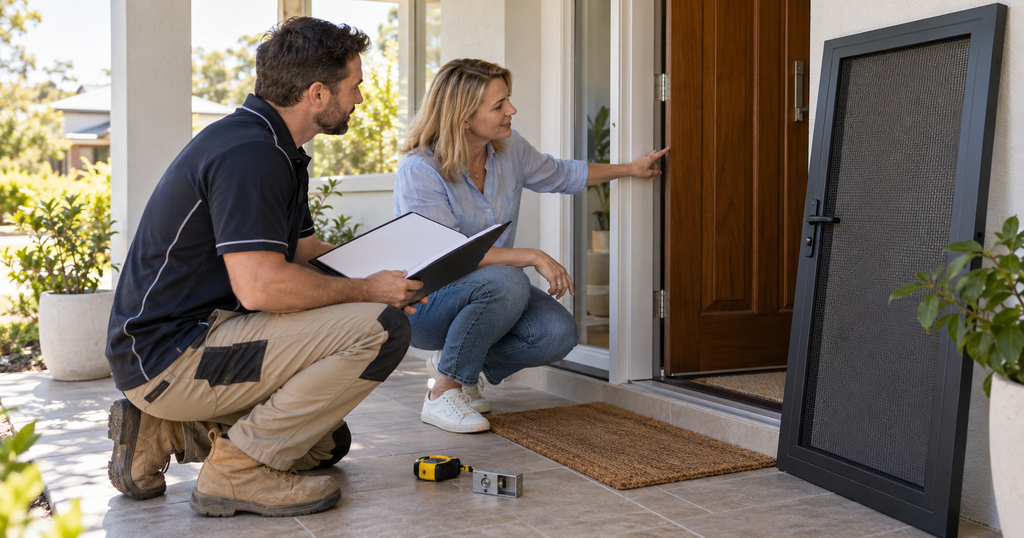
A door only earns real certification after passing Australian Standards testing under AS 5039.1:2023. The test checks whether the door can withstand impact, knife shear, and Jimmy’s attempts under lab conditions.
Suppliers must hand over proof the moment you ask for it. If a supplier can’t, the door hasn’t met home security requirements at all. A supplier who needs days to find the paperwork usually doesn’t have it.
Compliant doors also carry a physical label on the frame. Look for the label before signing an installation quote.
The label proves the product passed testing, but the installer decides how the door performs on your frame. Three questions will tell you whether an installer is worth booking.
Any reputable supplier will answer all three questions before you sign. If a supplier hesitates, remember that Australian consumer rights and guarantees still apply to installation work as much as the product itself.
Once the paperwork checks out, comfort comes next. A locked-down house and fresh air aren’t opposites, since the mesh does both jobs at once on doors and window screens alike.
Brisbane summers make cross-ventilation a real priority. Security doors with tight mesh weave let you leave your entry door open safely, even overnight.
Powder-coated aluminium frames pair with the same tight weave to keep insects out without blocking the breeze. Colour choice counts too, since darker frames absorb more heat across a long, humid season.
Hinged doors suit standard entryways, sliding doors suit wide openings, and stacking doors suit outdoor entertaining areas.
Larger doors for wide entryways often work best as sliding or stacking designs. Material counts just as much, especially if you’re still deciding between steel and aluminium security doors.
The table below compares all three door types by where each suits best, its main benefit, and its limitation.
| Door Type | Suitable For | Main Benefit | Limitation |
| Hinged | Standard entryways | Strongest lock and frame seal | Needs clearance to swing open |
| Sliding | Wide openings, patios | Saves floor space | The track needs regular cleaning. |
| Stacking | Outdoor entertaining areas | Opens the whole space at once | Higher upfront cost |
Each type offers different value depending on cost, upkeep, and space needed. All three still need to pass the same security testing, whatever the style. The right pick comes down to matching your opening and daily habits to the type that fits best.
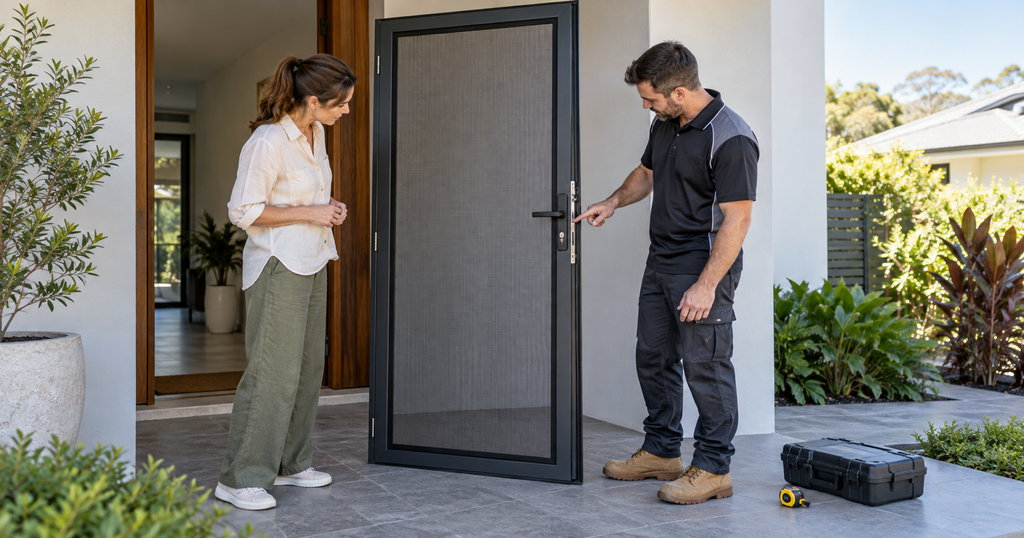
Picking the right door type is only half the job. The other half depends on how well your installer fits the door into the frame.
Fitting a security door follows its own rulebook, too. Every installer must follow the security door installation requirements in AS 5039.2:2024, so the fitted screen withstands the same forced-entry tests it passed in the lab.
Even with the standard in place, weak installs usually fail in two places. The first is an unreinforced door jamb, which compromises the whole door even when the lock and mesh pass testing. At Enfant Terrible Shop, we’ve refitted compliant doors that gave way because nobody reinforced the jamb.
Hinges are the second weak spot. Hinge security pins keep a door on its frame, and skipping them lets the right leverage force the door open from the hinge side.
Once the installer packs up, a few quick checks confirm the job holds up.
Your home is secure once three checks pass after installation. Skipping any of these checks leaves a gap in the system:
A single correct install beats three rushed installs without proper reinforcement. All three checks take a few minutes and confirm the lock, mesh, and frame work together.
Before installation day, confirm three basics: a tested door, a lock and mesh setup that suits your household, and an installer who reinforces the frame properly. Get all three right, and the door keeps performing for years.
We’re Enfant Terrible Shop, and we’d rather answer your questions honestly now than fix a bad install later. Contact us, and we’ll walk you through exactly what your home needs.
Security doors protect homes against modern burglary risks by putting... Read more →
Most people shopping for a security door don’t know what... Read more →
Security doors work hard for your home. They protect your... Read more →
Modern security doors have come a long way from the... Read more →
Not every door sold as a “security door” is built... Read more →
Our team of qualified professionals lets us provide the highest quality products and services for our customers. We believe in collaboration and innovation. We manufacture security doors following highest standards and ensure that they are robust enough to last many years.