How Security Doors Protect Homes Against Modern Burglary Risks
Security doors protect homes against modern burglary risks by putting... Read more →

Home » Security Doors » How Security Doors Protect Homes Against Modern Burglary Risks
Security doors protect homes against modern burglary risks by putting a tested barrier between an intruder and your entry. Most break-ins still start at the front of the house, so that barrier decides how it ends. A timber door with a single deadlock leaves that job to the weakest part of the frame.
Burglar habits have shifted as well. They favour quick daytime entries through doors that look easy to lever open. At Enfant Terrible, we keep finding the same thin frames and tired hinges on homes that feel safe from the inside.
This guide covers how a steel barrier stops forced entry, what mesh does under pressure, and where a security door and screen fit. Even a good door fails when someone fits it with poor fixings.
Most burglars give up within a minute when a door refuses to budge. A proper barrier outlasts that minute, and it explains why your entry deserves more than a timber slab and one deadlock. Three points below unpack what changes once tested security doors and screens go on the front of your home.
Intruders skip these houses because a visible steel frame signals effort, noise, and time. An opportunist won’t spend any of the three on one address.
They read your entry in a few seconds from the footpath, then move along to the neighbour with plain flyscreen doors instead. Local police tell us the same thing.
Bottom line: A visible security door deters burglars before anyone touches the lock.
A standard front door gives way at three spots: the hinge side, the lock block, and the thin timber around the strike plate.
Kick one near the handle, and the screws tear straight out of soft pine. That takes about five seconds and leaves the jamb split beyond repair.
Fly screen doors add nothing here, since their light corners pop apart the moment somebody twists the handle sideways. Front door security really starts with whatever sits in front of the timber.
Security doors meet Australian Standards by passing knife shear, jerry, pull, and dynamic impact tests before any manufacturer can sell them as security products.
The impact test swings a 40 kg bag at the panel over and over. The mesh must stay in its frame without opening a gap wider than 150 mm.
Ask any supplier for that certificate, because tested steel security doors carry one, and decorative lookalikes never do. Honestly, the paperwork tells you more than any sales pitch.
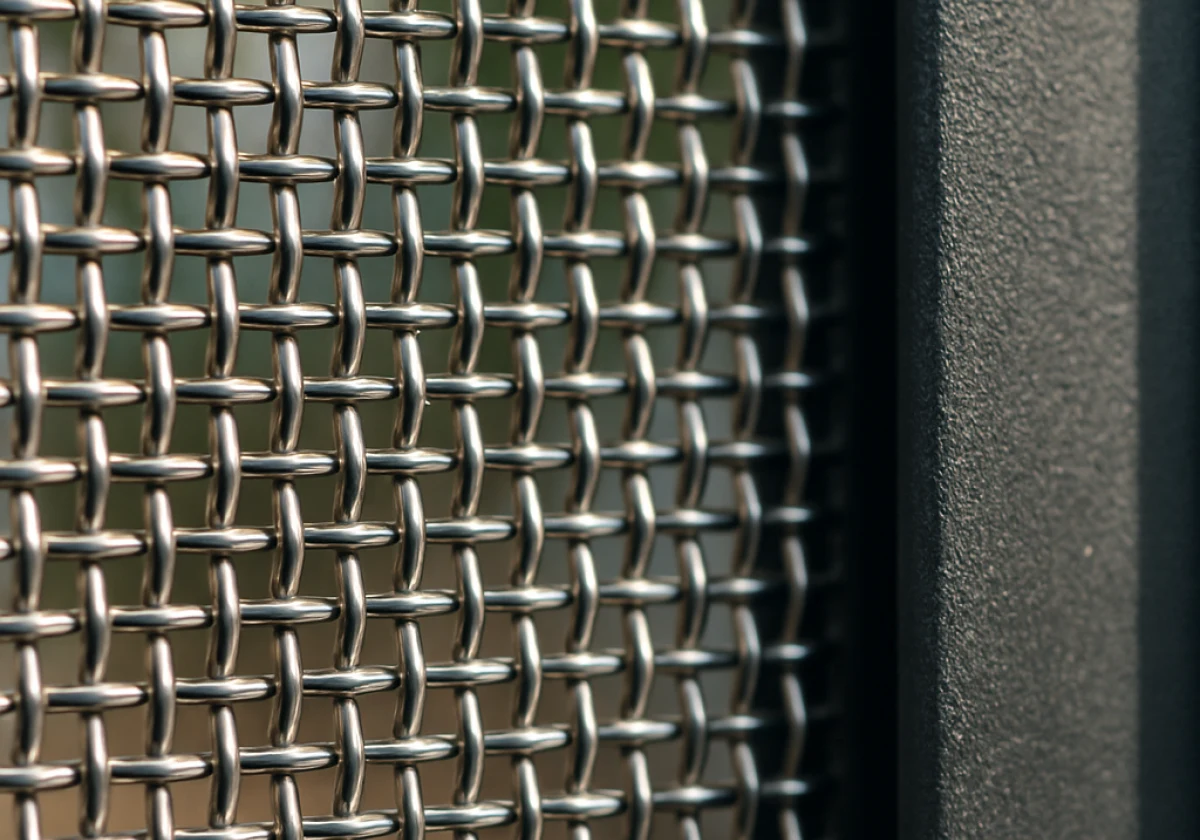
Woven steel mesh doors are hard to force because they spread any impact across the whole frame. One kick loads hundreds of wires at once, so no single point takes enough force to tear through.
How the mesh grips the frame counts just as much as the wire. Marine-grade mesh sits in a channel and gets clamped under pressure, which stops a screwdriver from peeling it away at a corner. Cheaper panels rely on rubber beading, and beading lifts out with one flat blade (a trick every installer has watched happen).
Wire grade counts as well. Grade 316 marine wire shrugs off salt air in coastal suburbs from Perth to Brisbane, while 304 suits inland homes at a friendlier price. On the other hand, aluminum security doors trade some strength for lighter weight, so they suit sheltered openings better than a main entry.
We fit stainless steel in our own homes. These doors cost more up front, but the savings show in year seven, when cheaper doors start to rust. Stainless resists the weld-line rust that ends cheaper doors early.
A security screen door and an ordinary screen door can cost similar money for very different protection. A jemmy bar sits on the showroom wall, and manufacturers count on that (showroom lighting hides a lot). Run your eye down this comparison before you sign anything.
| Feature | Security screen doors | Ordinary screen doors |
|---|---|---|
| Mesh | 0.8 mm woven stainless wire | 0.25 mm fibreglass insect mesh |
| Frame | 1.5 mm aluminium, welded corners | 1.0 mm, staked corners |
| Fixings | Tamper-resistant one-way screws | Standard exposed screws |
| Tested to | AS 5039 impact and jemmy tests | No standard applies. |
| Coastal lifespan | 10 to 15 years | 3 to 5 years |
Verdict: Mesh gauge and fixings tell you everything, and both take ten seconds to check with your fingers. Door security screens that pass AS 5039 carry the standard on a label. If a salesperson cannot name it, keep walking.
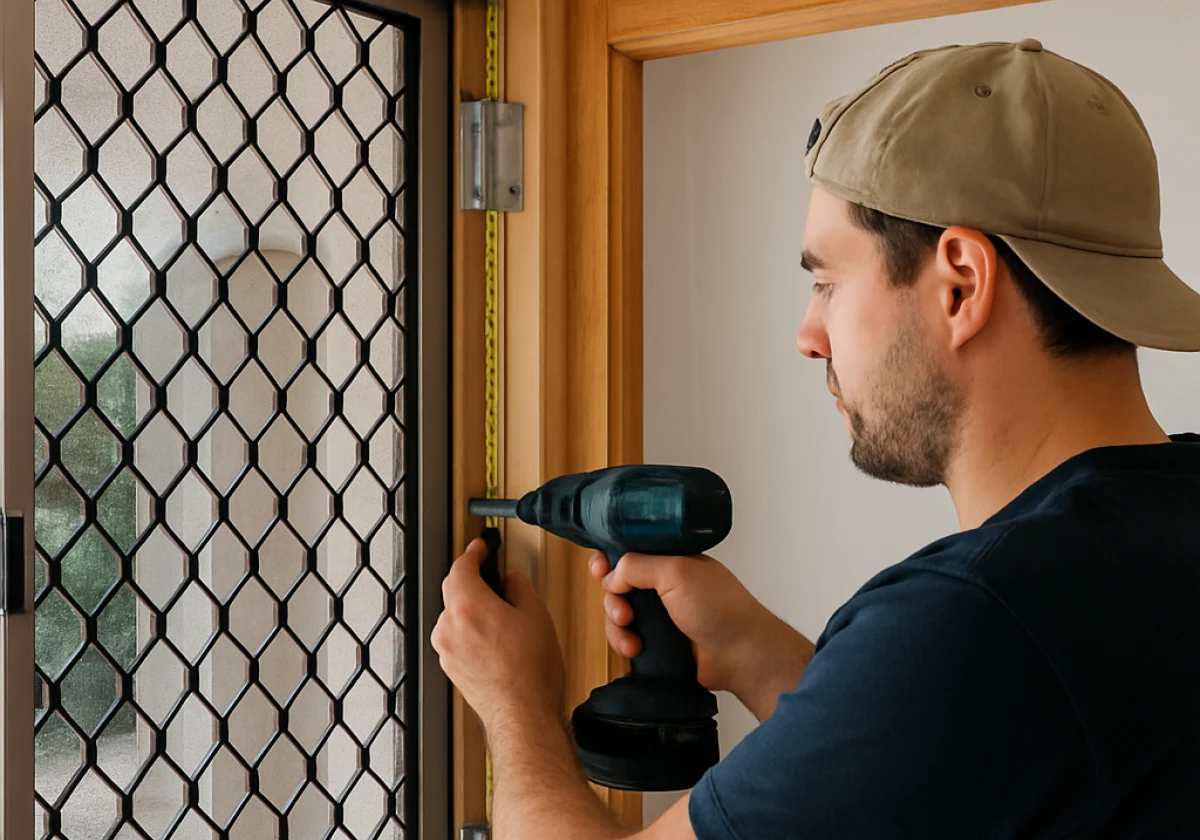
A poor fit lets a burglar lever open even the strongest door in seconds. Frame, fixings and the gaps around the edge carry the load in a break-in, not the mesh. Four checks separate professional security doorwork from an install that only looks secure.
Tip: Get all four checks right, and the door performs as tested. Ask your installer to confirm each one in writing before you pay a deposit.
These doors earn their keep in the few seconds an intruder spends deciding whether your house is worth the trouble. Tested mesh, a welded frame, and a careful fit keep that door shut.
Measure your openings and work out where hinged doors suit you better than sliders. Window Grilles and security window screens cover the spots a door cannot reach, and a security grille on a rear window closes the gap most people forget.
Enfant Terrible supplies and installs security doors, grille doors and screens for homes across Australia. Contact us for a free measure and quote.

Security doors protect homes against modern burglary risks by putting... Read more →
Most people shopping for a security door don’t know what... Read more →
Security doors work hard for your home. They protect your... Read more →
Modern security doors have come a long way from the... Read more →
Not every door sold as a “security door” is built... Read more →
Our team of qualified professionals lets us provide the highest quality products and services for our customers. We believe in collaboration and innovation. We manufacture security doors following highest standards and ensure that they are robust enough to last many years.