
The Importance of Security Door Maintenance for Long-Term Protection
Regular security door maintenance helps keep locks, hinges and mesh... Read more →

Home » Security Doors » Your Security Door Slams Shut: What Closing Speed Can Tell You About the Door
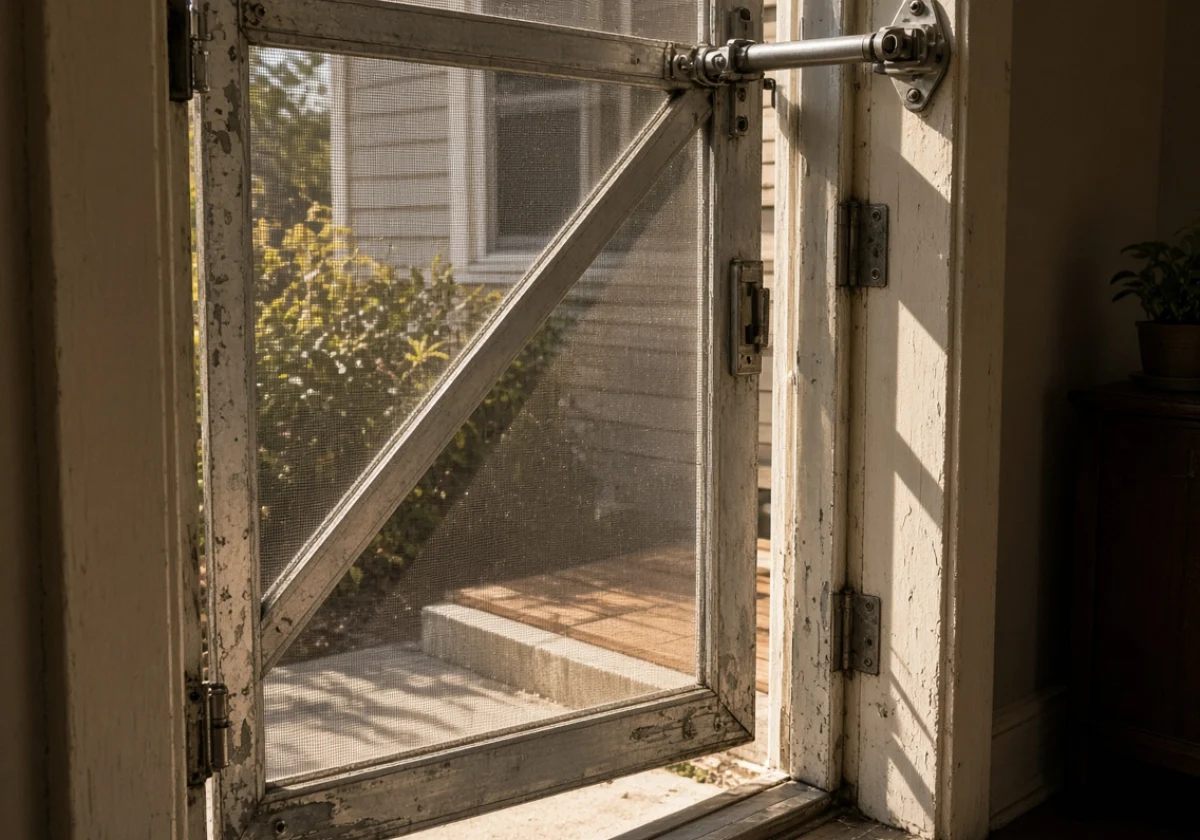
A slamming security door means the closer has lost control of closing speed, and it needs adjustment or repair. The loud bang often comes from your security door closer, the part built to slow the swing.
Plenty of households live with the noise until the frame rattles loose or the mesh pops its spline. Enfant Terrible builds and repairs security doors, and that slide from annoying to expensive is familiar.
This guide covers why closing speed drifts, what the slam speed tells you, and how to adjust a pneumatic model yourself. You’ll also see when screen door closers are past saving.

Your security door slams because the closer’s air pressure or spring tension no longer controls the closing speed. Inside most pneumatic units sits a sealed tube, a piston, and a spring that pulls the door shut. Air escaping past one small valve decides how fast that pull happens, and that valve is what makes the door closer adjustable at all.
But the valve can only do so much if the seal inside the tube wears out. Air then escapes too quickly, the spring keeps pulling, and the door finishes its travel at speed. Rubber wedges hide the symptom, but they don’t give you the braking back.
Weather affects closing speed, too. Cold mornings thicken the oil in a hydraulic buffer and drag the swing out. Hot afternoons thin that same oil and let the door run (a Perth summer shows this up inside a fortnight).
The door’s alignment also plays a part. Loose hinges drop the leaf a few millimetres, which changes the closer arm’s angle and affects its travel. Perished door seals add to the problem, since a flattened seal lets the leaf travel that bit further before anything stops it.
Over time, those problems become harder to ignore. You know the sound by then: aluminium cracking on aluminium at 6 am. And every slam puts more strain on the fixings, which may loosen further if the problem goes unchecked.
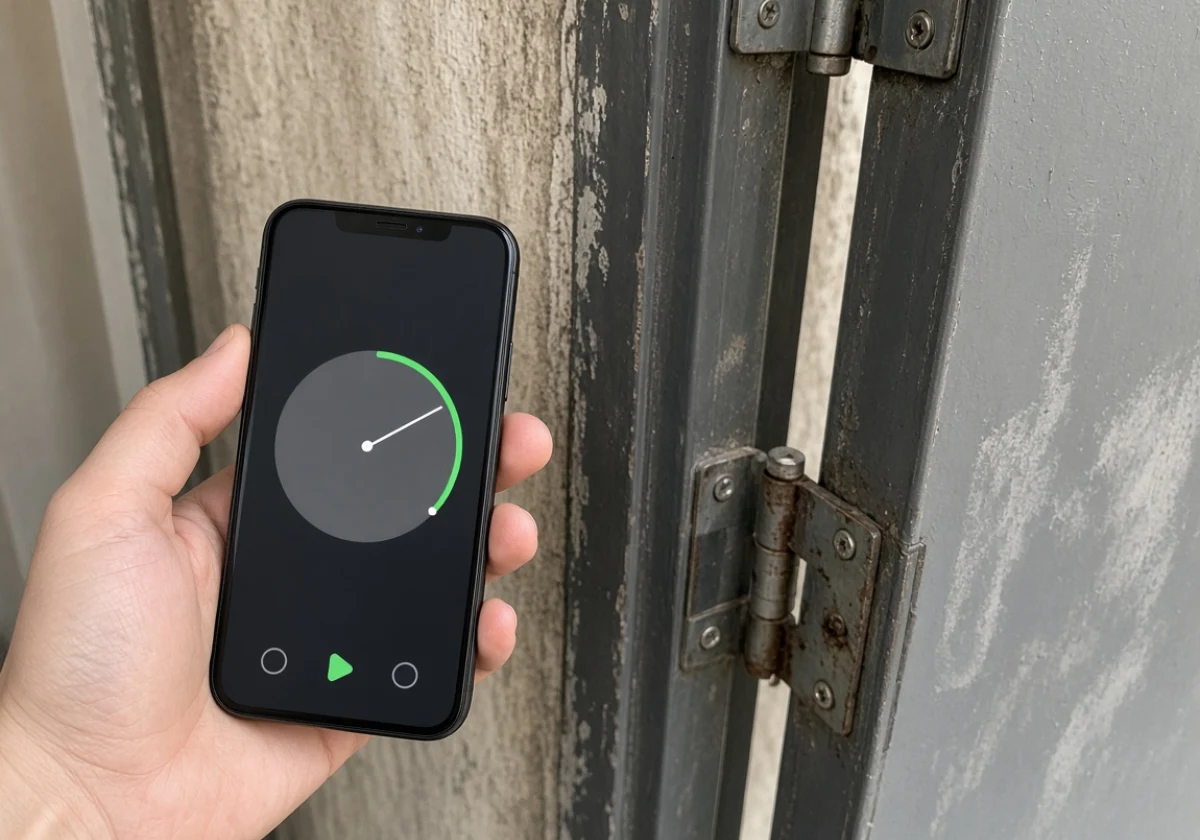
A security door that snaps shut in under two seconds deserves attention, especially if it bangs against the frame. Timing the swing on your phone gives you a starting point for checking the closer.
Australian door hardware guidance can also emphasise controlled closing speeds. For example, the NSW Department of Education’s 2025 Design Technical Requirements calls for adjusting door closers so doors close without slamming. Although the document covers educational facilities, the same principle applies to household security doors.
Match what your door does against the speeds below.
| Closing time | What it points to | Next step |
|---|---|---|
| Under two seconds | Blown piston seal | Replace the closer |
| Two to four seconds | Valve wound too far open | Adjust the speed screw |
| Five to seven seconds | Closing as designed | Leave it alone |
| Over 10 seconds | Spring tension gone | Replace the closer |
Note: These closing times reflect our observations, not official Australian industry standards. Results may vary depending on the door’s weight, closer type, and condition.
Any sticky spot halfway through the stroke points at the arm binding, not the valve. On a high-security screen, the extra weight makes that stutter obvious, so the hinges deserve a look before you touch an adjustment screw.
A door closer adjustment is usually a 10-minute job with nothing more than a screwdriver. When you know which screw controls the closing speed, you’re less likely to make the slamming worse.
The sections below explain how to adjust your closer, spot signs of damage, and decide when to call a professional.
Most pneumatic door closers have an adjustment screw at one end of the cylinder. The screw controls how quickly air escapes as the door closes, which affects its speed.
Before adjusting the screw, release any hold-open catch on the arm so you can test the door’s natural closing speed. Next, turn the adjustment screw a little at a time, following the manufacturer’s directions. Test the swing after each turn to see how the speed changes. Small adjustments work best here, since turning the screw too far may leave the door closing too slowly.
However, never wind a screw right out, because the piston loses its air for good (no repair brings that air pressure back). Check the manufacturer’s adjustment limits before going further. If your door uses a basic spring closer instead, there’s no air valve to adjust.
How do you know when adjusting the screw won’t fix your screen door closer? Oil leaking from the cylinder is one warning sign, especially on hydraulic models. A damaged seal may prevent the closer from controlling the door’s speed. You should wipe the cylinder clean, close the door ten times, then check whether fresh oil appears.
Bent arms are another reason to consider replacement. Once the arm bends, it may pull the closer out of alignment and interfere with the piston’s movement. And if you continue using the door, the extra strain on the mechanism will cause further damage.
You should also look for rust around the bracket. Coastal homes often see faster corrosion on door handles, hinges, and closers because salt air attacks exposed metal (salt air chews through anything that isn’t stainless steel). If rust has weakened the bracket or pivot, replacing the damaged parts is safer than trying another adjustment.
Call a locksmith once the door has dropped, because a sagging leaf needs the hinges squared first. We install and repair security doors, so take this plainly: no door closer adjustment fixes a frame that’s out of square.
If the closer is still under warranty, contact the manufacturer or supplier before attempting repairs. They may offer a replacement or repair under warranty, while attempting repairs yourself could affect your coverage. Check the closer’s maximum door width and weight, too, since fitting it to a door outside its rated limits may affect warranty coverage.
For commercial door control setups that connect the closer to security door locks or panic exit devices, call a qualified door hardware technician. Guesswork there leaves a building unsecured overnight.
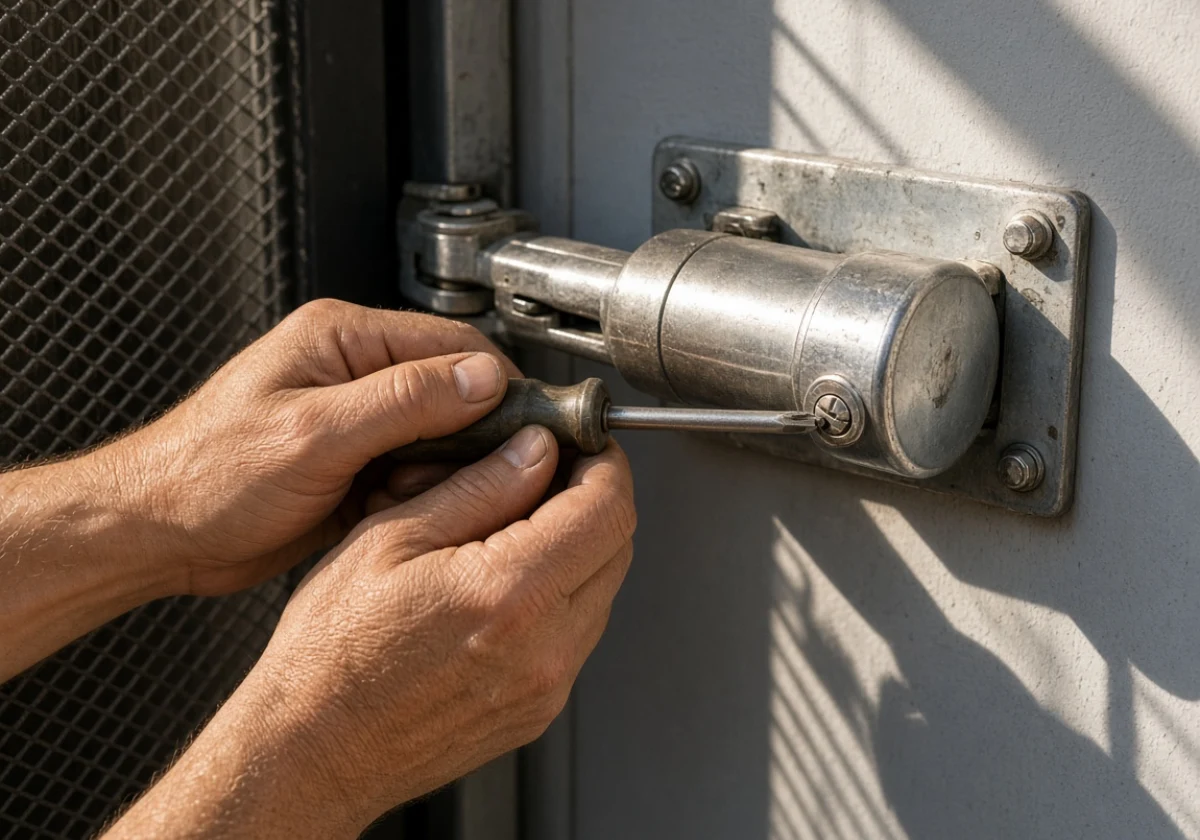
If adjustment hasn’t fixed the slam, you’re looking at a full replacement. And choosing a replacement means checking the door’s measurements, mounting style, and finish. Fitters who swap these out regularly measure the leaf before they open a catalogue.
Take a look at these details when choosing a replacement.
If your home has an older security door, its mounting holes may not line up with a new closer. Measure the existing bracket spacing to see if you’ll need new fixing points. With the size and mounting requirements checked, you can choose a finish that matches your door.
A slamming security door often points to a closer that’s no longer controlling the closing speed properly. Sometimes, a small adjustment is enough to fix it. However, damaged components may need replacing.
Start by checking how quickly the door closes, then adjust the screw in small increments according to the manufacturer’s instructions. If the closer still struggles or you notice oil leaks, bent arms, or damaged brackets, it’s worth having the hardware inspected.
Enfant Terrible manufactures, installs and repairs security doors for domestic and commercial premises. Contact us to talk through your closing speed problem and get the door shutting quietly again.

Regular security door maintenance helps keep locks, hinges and mesh... Read more →
A slamming security door means the closer has lost control... Read more →

When an automatic door starts hesitating, it’s warning you that... Read more →
Most Australian homeowners assume a security door is only for... Read more →
Security doors protect homes against modern burglary risks by putting... Read more →
Our team of qualified professionals lets us provide the highest quality products and services for our customers. We believe in collaboration and innovation. We manufacture security doors following highest standards and ensure that they are robust enough to last many years.