
Security Door or Barrier Door? What Are You Really Being Quoted For?
Most Australian homeowners assume a security door is only for... Read more →

Home » Security Doors » Comparing Steel vs Aluminium Security Doors: Which Should You Choose?
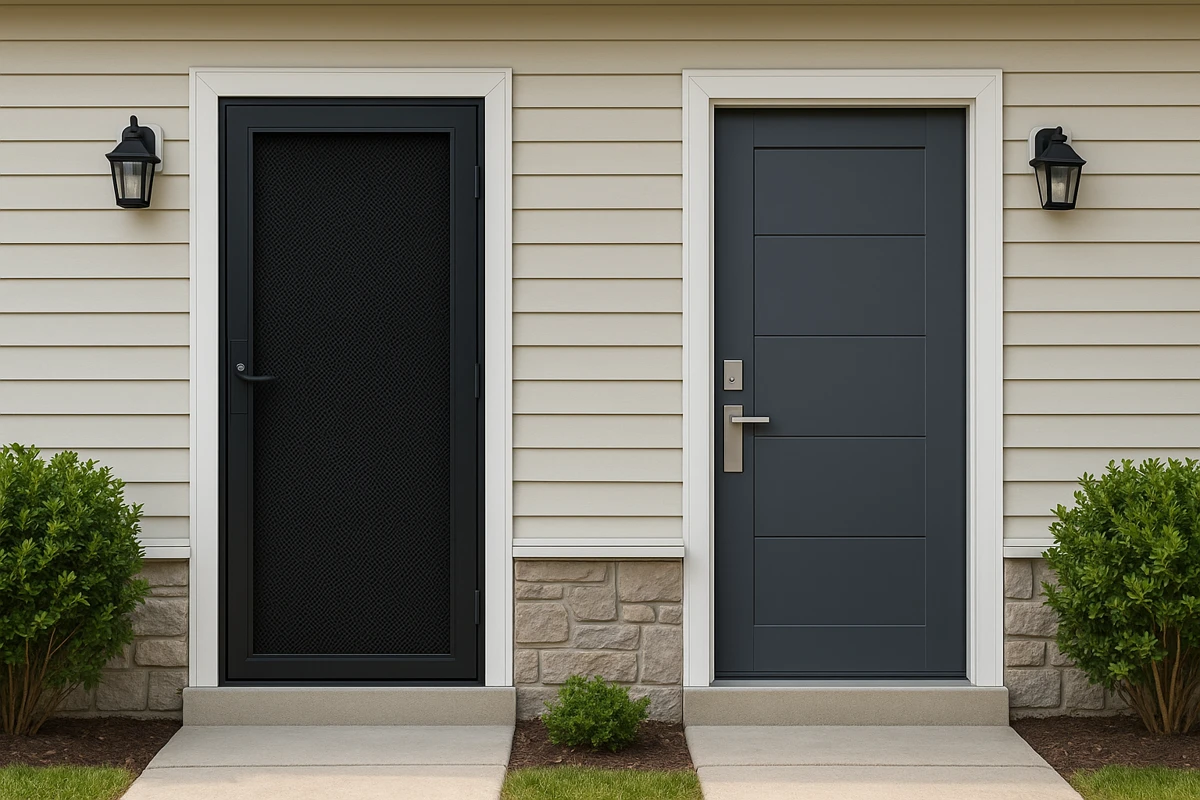
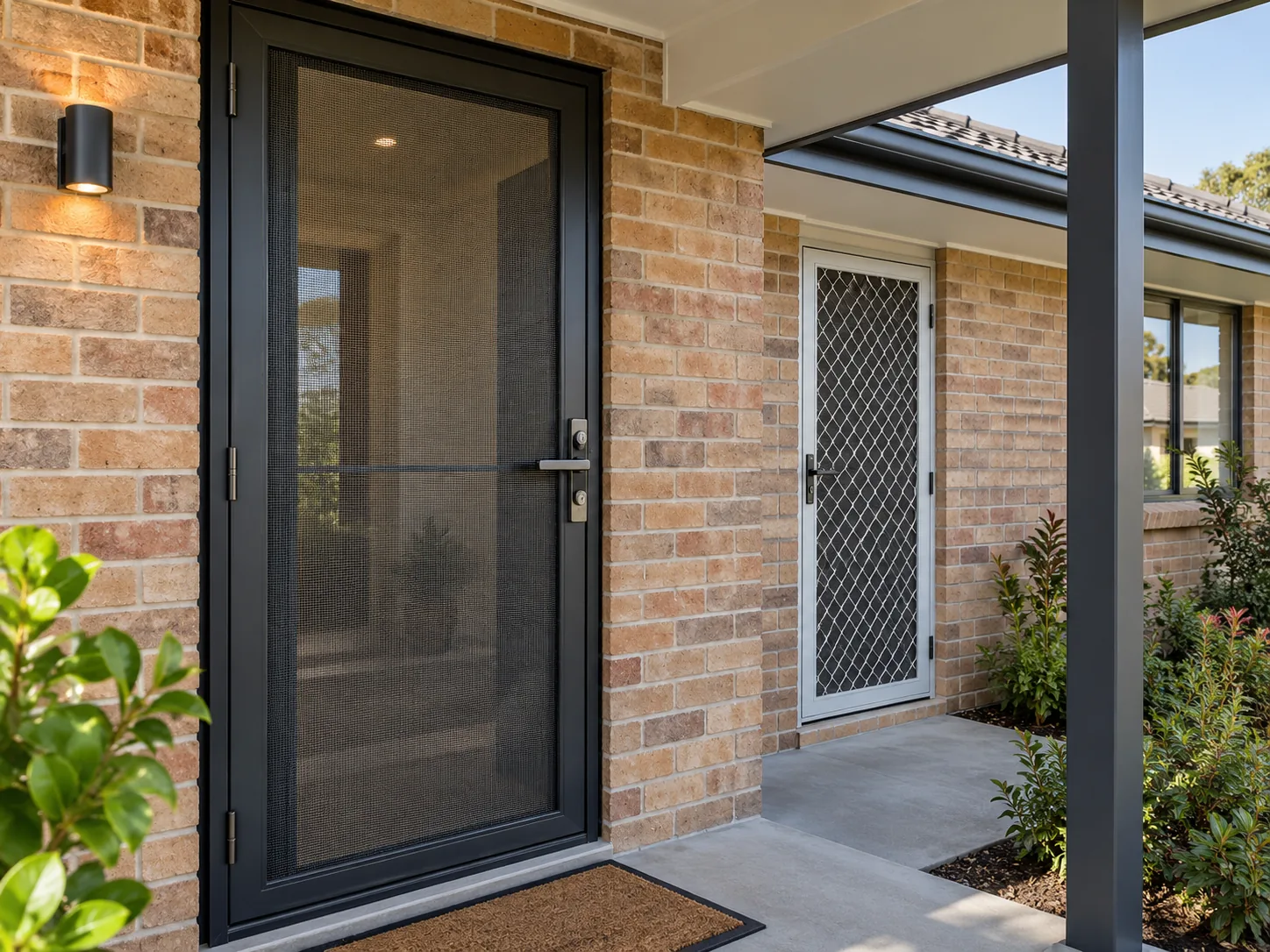
Steel security doors are known for their maximum protection against forced entry, while aluminium doors resist rust and require almost no maintenance.
But that’s not all there is to it.
You also need to think about where you live, your budget, and how much upkeep you’re willing to handle.
That’s why we’re breaking it all down. You’ll see how steel and aluminium security doors perform in strength, maintenance, cost, and real-world conditions, so you can confidently pick the right door for your home.
Pick the wrong material and you’ll deal with rust within 5 years or watch your door fall when you need it most. But durability is just the beginning. Your material choice also affects your upkeep, insurance premiums, and most importantly, how secure your home is.
In our 26 years of installing security doors across Australia, we’ve seen mistakes caused by choosing doors based on price alone. A steel door in a coastal home can corrode in under 10 years, while an aluminium door inland misses out.
The thing is, picking the right material saves you money and hassle over the door’s lifetime. Let’s break down what steel and aluminium actually deliver in real-world use.
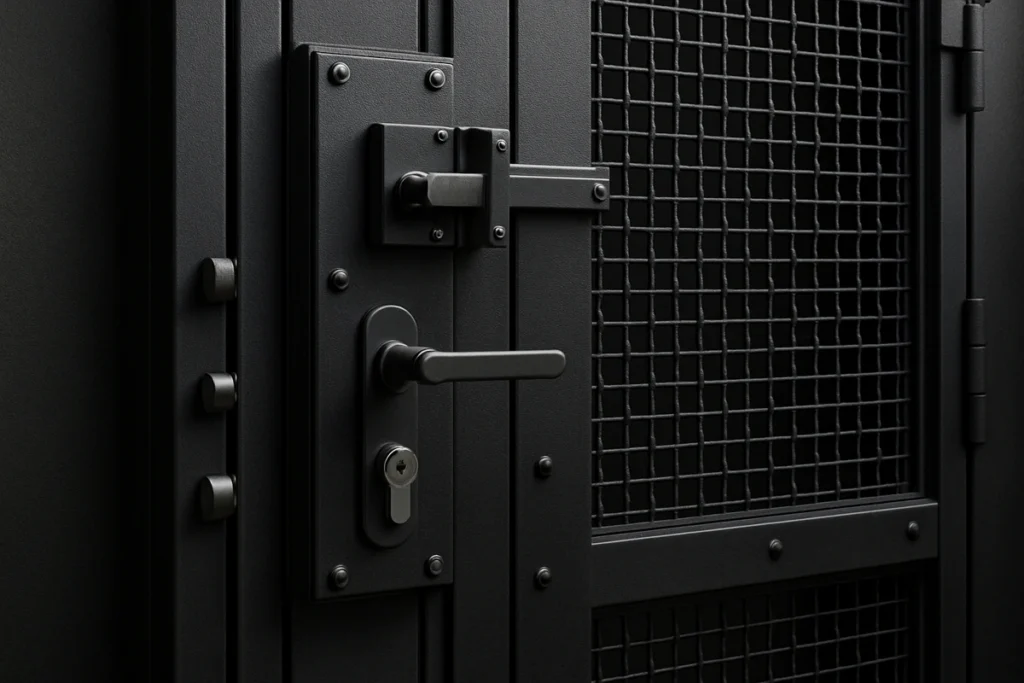
Steel doors are built from solid or reinforced steel frames. They’re the default choice when protection is the priority. Here’s what makes them a solid investment.
Someone kicking your door or using a crowbar? Steel holds where lighter materials buckle. That extra strength is why some insurance companies offer discounts for steel installations, since they genuinely reduce break-in risk. If you live in a higher-crime suburb like Fortitude Valley or Inala, or store valuable equipment at home, steel is the safer choice.
A properly powder-coated steel door can last 20 years with minimal issues. The coating blocks moisture and weather damage. We’ve seen steel doors in dry, inland Brisbane areas look near-perfect after 15 years.
But there is a problem.
If the coating chips and you ignore it, rust appears fast. So, we recommend that you check your door once a year for scratches or worn spots. It’s better to touch them up before rust starts.
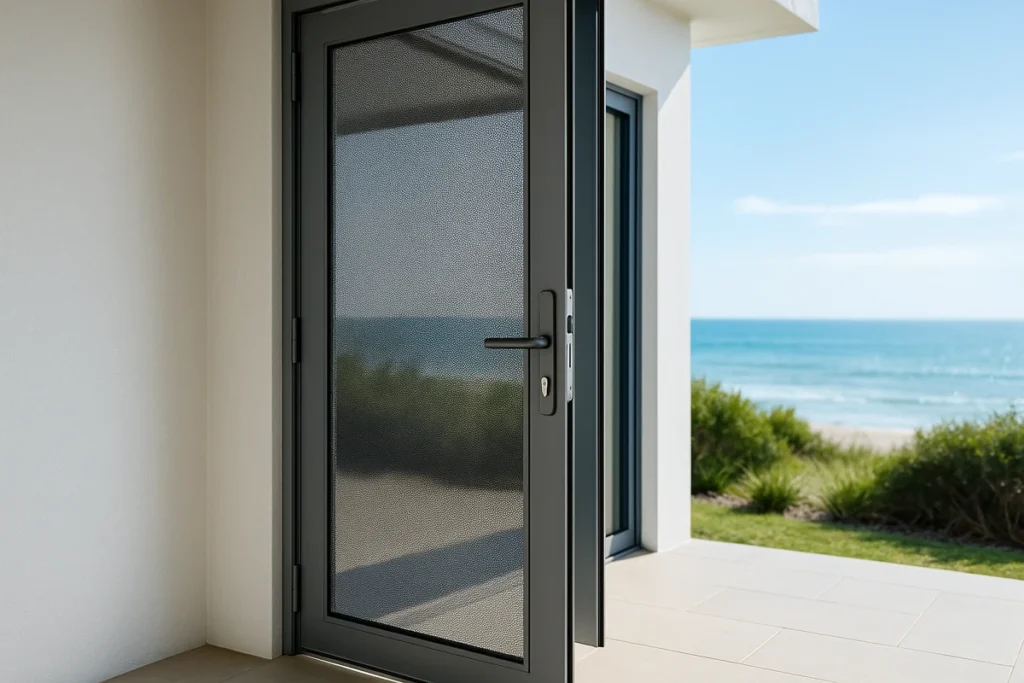
Aluminium doors trade some impact resistance for rust-proof performance and easier daily use. For most Aussie homeowners, that’s a smart trade. There’s plenty more that aluminium brings to the table. Let’s know about them.
Aluminium doesn’t rust. It forms a natural layer that protects the metal from corrosion. That means less maintenance for you and no checking for spots or repainting every few years.
Aluminium also handles humid or coastal conditions better, so your door stays strong and looks good for years.
One of the biggest benefits of aluminium doors is that they are light. Even kids or older family members can open and close them without any struggle. Installation is easier, too, since you usually do not need heavy frames or reinforced hinges. The lighter weight puts less stress on the hardware, so your door will not sag or wear out as quickly.
These doors have clean lines and a contemporary style, instantly giving your home a fresh look. Their lightweight design also lets them feature more intricate patterns without weakening the frame. If curb appeal matters to you, aluminium doors give you plenty of stylish options without ever feeling industrial or heavy.
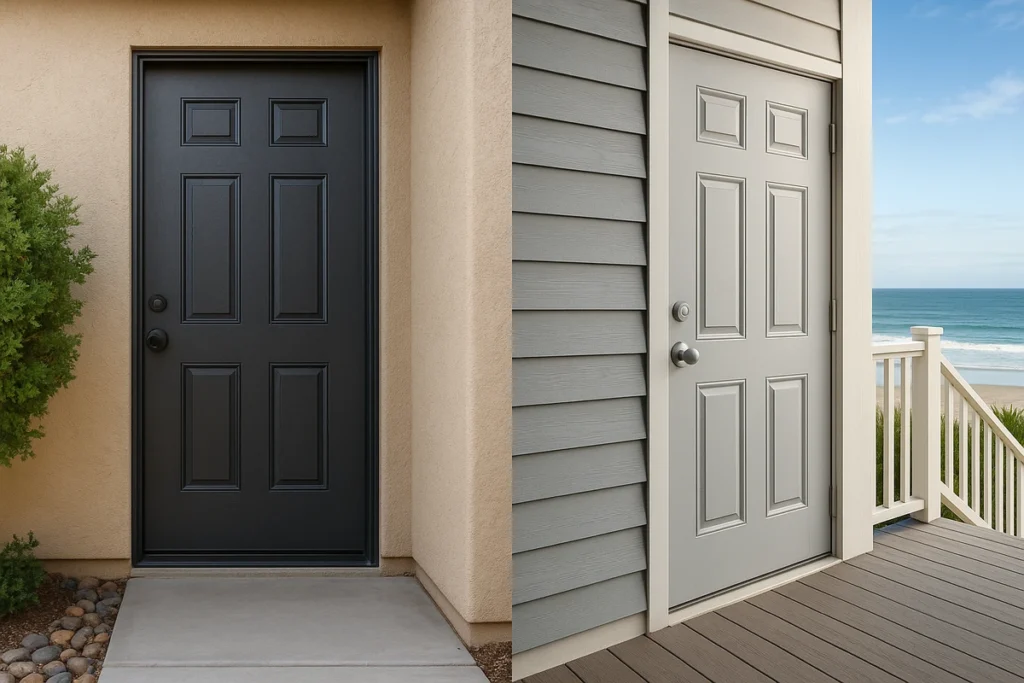
Let’s put these two materials side by side and see how they actually stack up in the real world.
| Factors | Steel | Aluminium |
| Strength | Maximum impact resistance and break-in protection | Handles everyday impacts but dents more easily |
| Maintenance | Needs annual maintenance and rust checks | Requires low to no maintenance |
| Cost | Higher upfront, potential insurance benefits | Lower upfront and easier to install |
| Climate Fit | Suited for dry, inland areas | Ideal for coastal or humid regions |
Quick breakdown:
Strength
Maintenance
Cost
Climate Fit
Daily Use
To be honest, the best choice depends on location, security needs, and budget.
Choose aluminium if:
Choose steel if:
Both materials work well when matched correctly. If you’re confused, talk to a local installer who knows your specific area.
Steel security doors and aluminium security doors both deliver solid home safety. Steel wins on strength and works brilliantly inland or in high-security situations. Aluminium takes the lead for coastal homes, easy maintenance, and budget-friendly installations.
Match your choice to your location, security needs, and maintenance preferences. There’s no wrong answer, just different priorities for different homes.
Still deciding? Get in touch with us and we’ll help you pick the right door for your home. Enfant Terrible has been installing security doors across Australia for over 25 years. We know what works in every neighbourhood.
Most Australian homeowners assume a security door is only for... Read more →
Security doors protect homes against modern burglary risks by putting... Read more →
Most people shopping for a security door don’t know what... Read more →
Security doors work hard for your home. They protect your... Read more →
Modern security doors have come a long way from the... Read more →
Our team of qualified professionals lets us provide the highest quality products and services for our customers. We believe in collaboration and innovation. We manufacture security doors following highest standards and ensure that they are robust enough to last many years.