
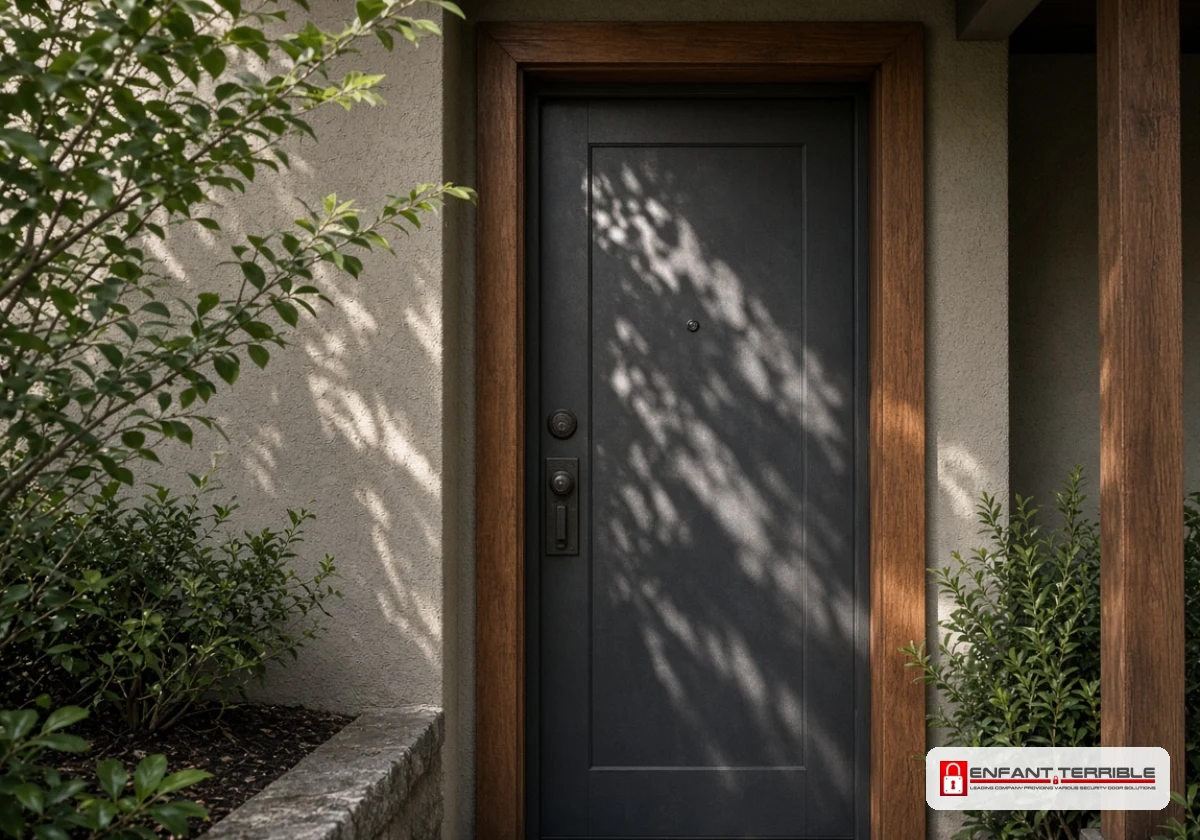
Security Door Hinges: The Small Component That Can Cause Major Entry Problems
Security door hinge problems usually start small, with one loose... Read more →

Home » Security Doors » Security Door Hinges: The Small Component That Can Cause Major Entry Problems
Security door hinge problems usually start small, with one loose screw or a worn pin, then spread to the lock, the frame, and the closer. Fix the hinge early, and you’ll save the rest of the door from expensive damage.
That’s because a steel door hangs its full weight off a few hinges every time it swings. When one hinge slips, the door drops toward the latch side. Homeowners often blame the lock, even though the fault sits on the opposite edge. This guide from Enfant Terrible, a security door supplier and installer, traces those faults back to their source.
You’ll learn the four common causes of hinge failure and the warning signs a sagging door gives you. We also walk through four realignment fixes and explain when replacement beats another patch job.
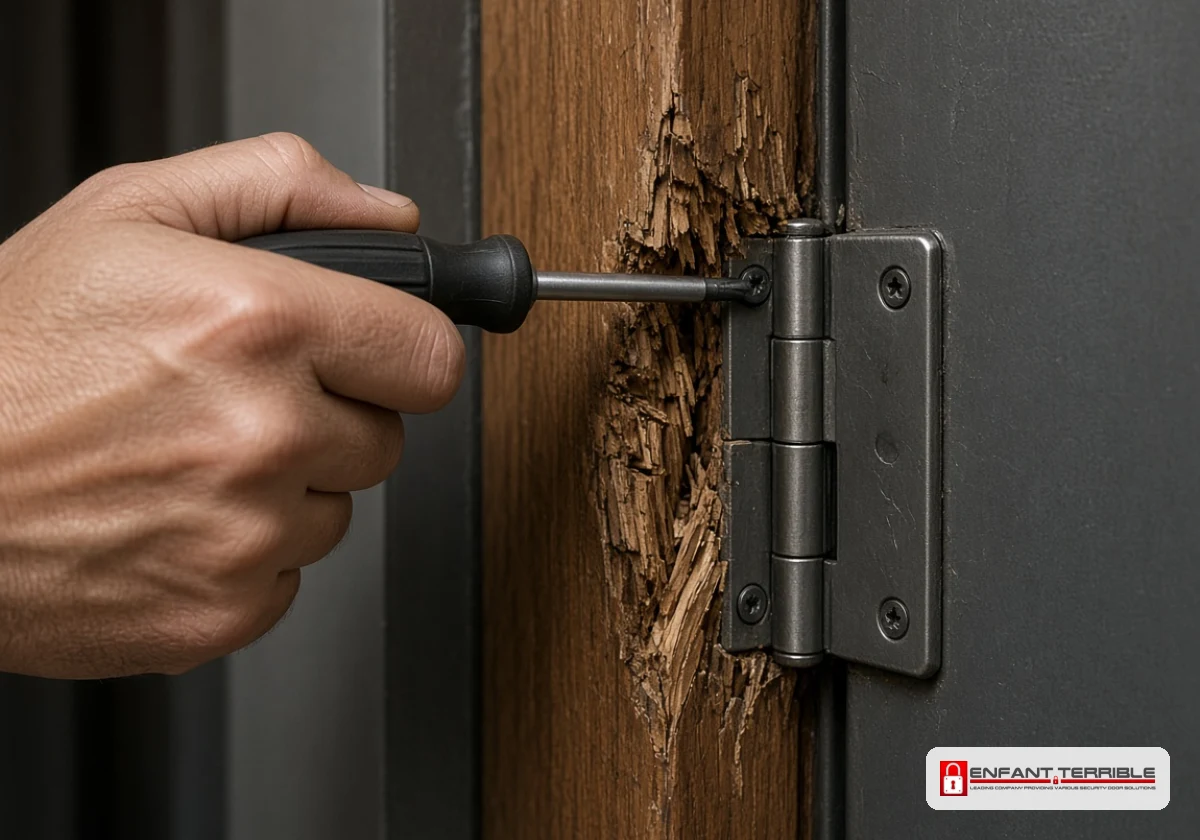
Security door hinges fail because they carry a heavy steel door’s weight through a handful of screws and one pin on every swing. The door panel and the rest of the door hardware can stay in great shape while that small pivot point wears out underneath them.
Here are the four most common ways hinges give out.
Hinge screws work loose because every swing levers the door’s weight against the top hinge. Over time, the threads chew out the timber door jamb and the screws spin freely.
Short screws make the problem worse. Many grip only the thin jamb lining and never reach the stud behind it (a common shortcut on rushed or budget installs). Once that lining crushes, the whole hinge starts to shift.
A screwdriver gives you the answer in under a minute. Try each screw on the top hinge, and fix any that turn without tightening before the door drops further.
Inside every hinge, a small sleeve called a bushing sits between the pin and the knuckle around it. Under a heavy steel door, that sleeve takes a beating on every swing. When it wears through, metal grinds on metal, and the door develops side-to-side play.
Often, you’ll hear the damage before you see it. A dry squeal halfway through the swing tends to mean the bushing has gone and the pin is wearing an oval hole.
You can confirm the wear without taking anything apart. With the door open, lift it by the handle and watch the knuckle for movement.
Yes, repeated slamming can bend a steel hinge leaf, particularly when strong wind catches an open door. The force can twist the leaf near the knuckle, causing the door to sit unevenly in its frame.
In our hands-on hinge work, the top hinge is usually the first to bend. It takes the strongest pull every time the door hits its stop. Once the metal stretches, the leaf won’t straighten properly.
That makes prevention your best option. A closer set to the right speed eases the door shut before it can slam. Our notes on adjusting a security door closer show you how to slow the final swing.
Salt air speeds up corrosion on exposed steel, and hinge pins sit right in the firing line. The HIA guidance on avoiding rust (2025) describes a surf-coast build where under-rated galvanised steel corroded within two years. Fixing it cost $30,000.
If you live a few streets back from the beach, you’ve probably watched a gate latch go orange within a season or two. Hinge pins face the same salt exposure, and once rust sets in, they seize. That’s why you should rinse the hinges with fresh water as part of regular door maintenance, and choose stainless-steel pins at replacement time.
Those four failures rarely announce themselves with a loud bang. Instead, security door sagging gives you quieter clues long before the hinge gives out completely.
The latch corner drops first when the top hinge loosens, which is why many clues show up there. And because the door still opens and closes, the problem is easy to miss. Most people start lifting a door that drags or shoving one that sticks without realising they’re compensating (we’ve all done the hip bump at some point).
Each of these small habits points to a door sitting lower or crooked in its frame. Once you know what to look for, the following signs are easy to spot:
By the time the lock and latch start acting up, security door hinge problems are already straining the lock. You should treat those two signs as the most urgent.
Once the latch edge has dropped or the top gap has widened, the next job is getting the door hanging true again. A misaligned security door often needs only a screwdriver, packers, and a tape measure, provided the hinges themselves aren’t bent.
To decide which fix your door needs, work through these four steps in order.
Start with the screws, because loose fixings are a frequent cause of sag and cost almost nothing to fix. Tighten every screw on each hinge, beginning with the top one. If a screw keeps spinning, swap it for a longer screw that reaches into the stud behind the jamb. That extra length gives the threads fresh timber to grip.
Then close the door and check the top gap again. An even gap means you’ve solved it, while an uneven one sends you to the next step.
Packing means placing a thin shim behind a hinge leaf to push the door slightly sideways in the frame. A shim behind the bottom hinge tilts the latch corner upward.
To do this, loosen the hinge screws, slip in a piece of thin cardboard or a plastic packer, and retighten. Our tip from experience is to add one thin layer at a time (thicker packers can bind the door against the frame).
After each adjustment, swing the door through its full range. You should stop packing once the latch edge clears the threshold without rubbing.
If packing won’t hold the door level, the hinges may not be the problem at all. Sometimes the hinges are fine, and the frame has moved instead. Timber jambs can twist with moisture, and house movement can push a frame out of square.
A tape measure will tell you. Run it across both diagonals of the opening, corner to corner. Matching numbers mean the frame is square, and our guide to measuring a door frame correctly shows the right method.
If the diagonals differ noticeably, more hinge adjustment won’t fix it. A frame repair needs to come first.
Even after the door is realigned, the lock might still struggle to catch. In most cases, the latch no longer lines up with the strike plate, the metal plate on the frame with an opening for the latch. A dropped door can leave it sitting a few millimetres too low.
A simple chalk test shows you how far off it is. Rub some chalk or lipstick on the end of the latch, then close the door gently so it presses against the plate. When you open it again, the mark shows exactly where the latch is landing.
How you fix it depends on the size of that gap. If the mark sits within 2 to 3 mm of the opening, widen the edge with a metal file, testing the door as you go. For anything bigger, unscrew the plate and move it to line up with the mark.
Moving the plate does leave old screw holes right beside the new ones. Fill them with timber dowels and glue first, so the new screws have solid wood to grip. Once the latch slides in without a push, the lock can engage fully and hold the door secure.
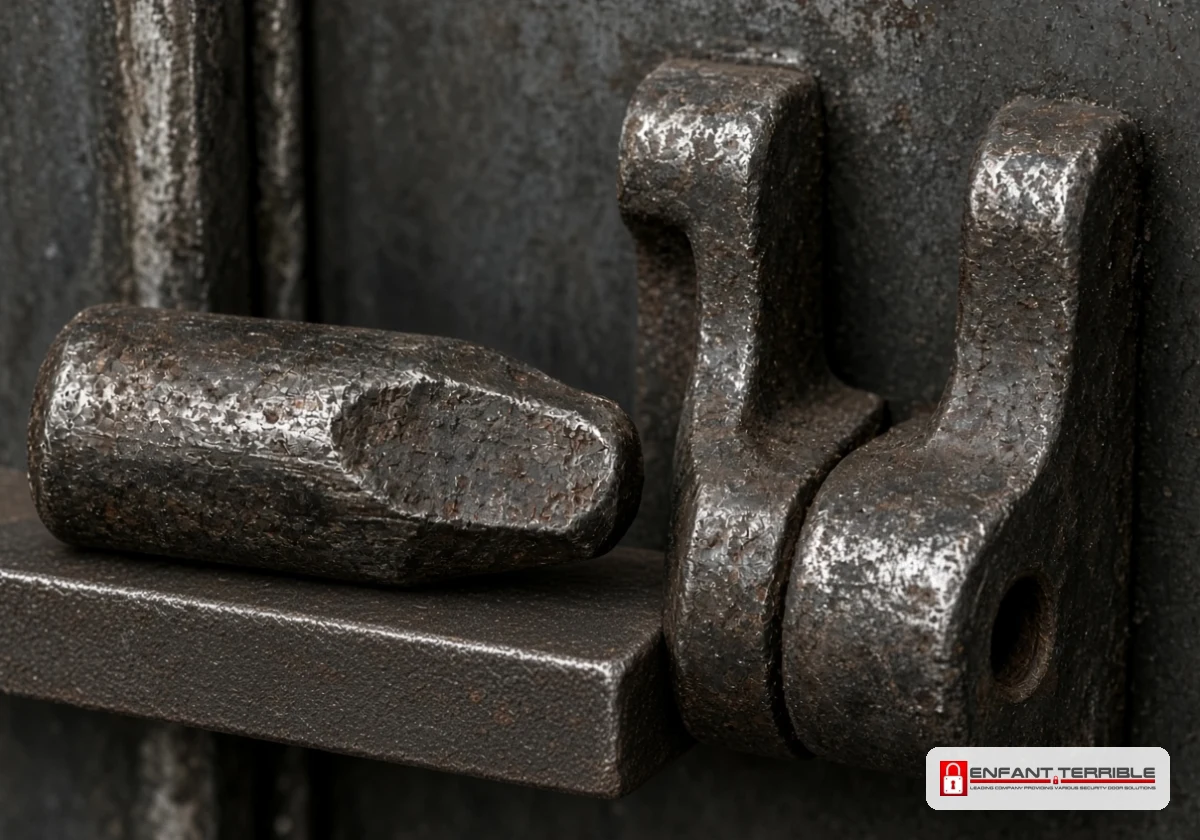
Every repair above has a limit. If you’ve packed, tightened, and adjusted the same hinge more than once, the metal is worn, and a security door hinge replacement is the better fix.
Three factors will tell you whether one more repair is worth it.
Of those three, pin design comes first, since a removable pin is a security risk in any condition. When you do replace, swap every hinge together so the door’s weight stays evenly shared from the start.
Start with the top hinge this weekend. Tighten any screw that spins, measure the top gap, and check whether the pin lifts out. If the door still drops after one round of packing, plan a security door hinge replacement before the lock and frame take the strain.
Ready to get your door hanging straight again? Book a free measure and quote with Enfant Terrible for honest advice on whether to repair or replace.
Security door hinge problems usually start small, with one loose... Read more →
If your security shutter is damaged, don’t rush to replace... Read more →

Commercial properties need professionally installed security doors because correct fitting... Read more →
Regular security door maintenance helps keep locks, hinges and mesh... Read more →
A slamming security door means the closer has lost control... Read more →
Our team of qualified professionals lets us provide the highest quality products and services for our customers. We believe in collaboration and innovation. We manufacture security doors following highest standards and ensure that they are robust enough to last many years.