
Easy Ways to Keep Your Security Door Working Smoothly
A security door protects your home only when every component... Read more →

Home » Security Doors » Easy Ways to Keep Your Security Door Working Smoothly
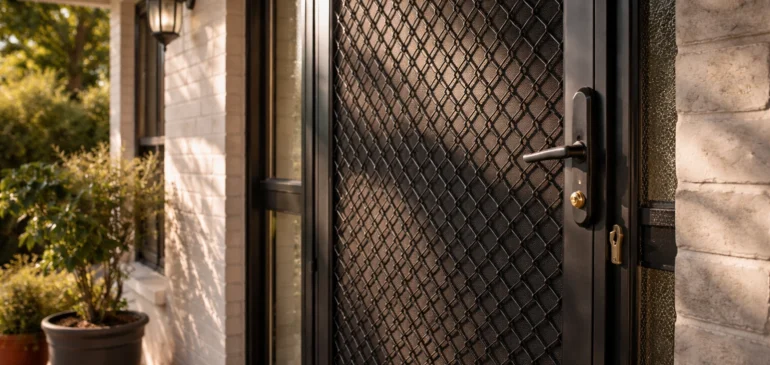
A security door protects your home only when every component functions as designed. Your locks, hinges, and mesh work together to stop illegal entry, but daily use gradually wears them down.
Most homeowners don’t notice the small signs that their door needs fixing until something fails. As a result, doors stick, locks feel stiff, or the mesh develops tiny gaps that grow wider each month. It proves the problems don’t appear overnight.
This guide covers the simple monthly checks that catch issues early and the quick fixes that keep your door working properly. You’ll also see how to spot wear patterns before they convert into expensive repairs.
Let’s get into it.
Regular cleaning preserves your door’s protective coating and mechanical reliability. Without it, dirt buildup wears down finishes and hardware that make your door work smoothly and resist weather damage.
Now, have a look at the following cleaning practices, which prevent the most common damage we see on security doors:
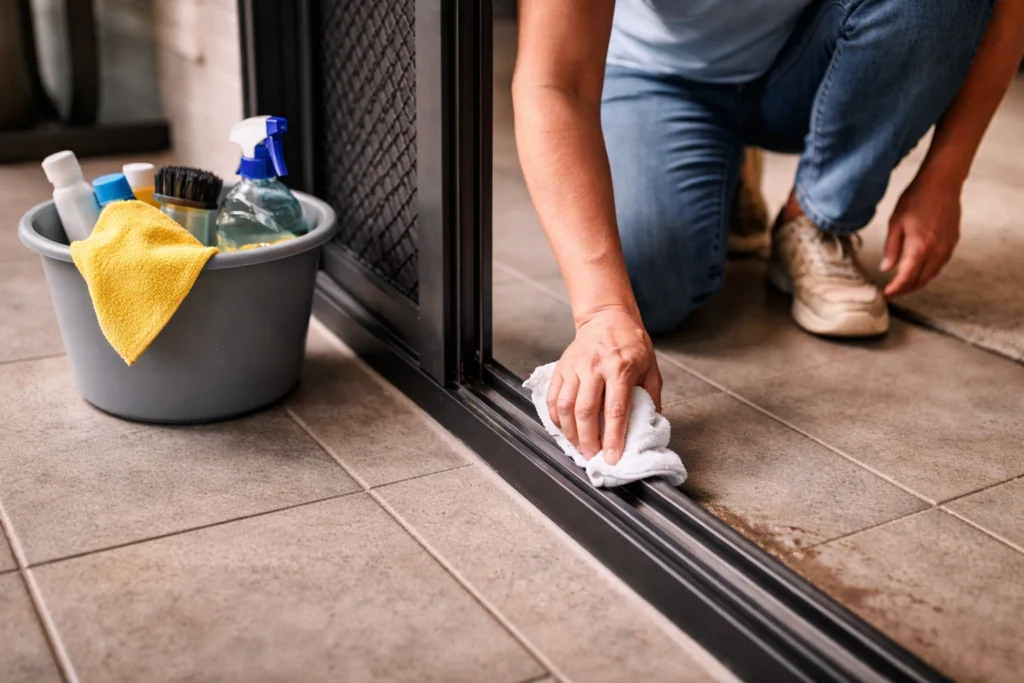
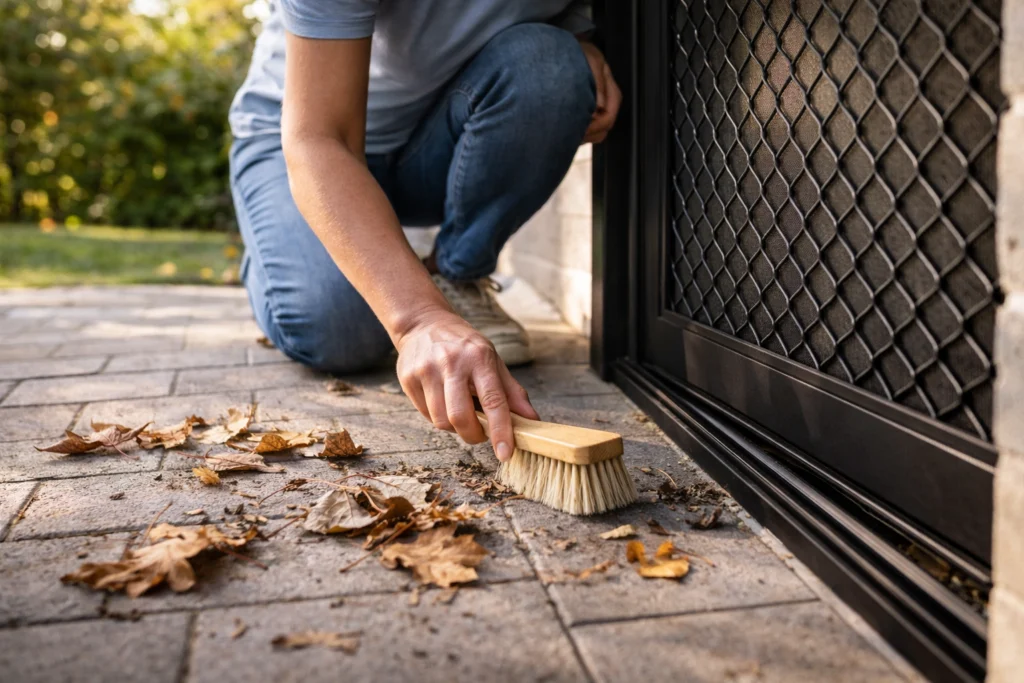
Dust and pollen cake onto the tracks, making your door harder to close each week. That grime isn’t sitting there harmlessly. It’s building up layer by layer until the rollers can’t glide smoothly anymore.
These buildups on sensors can trigger false alarms by blocking the detection beam. Plus, salt residue from winter roads also corrodes metal frames surprisingly fast.
On top of that, Sydney coastal properties exposed to sea spray can develop visible corrosion on untreated frames within a single season if you skip weekly rinsing.
To prevent the dirt buildup, wipe down tracks with a damp cloth every week to remove visible dust before it hardens. This five-minute task prevents most mechanical issues and keeps sensors functioning properly.
Generally, ammonia-based cleaners damage the protective coating on aluminium doors permanently. Their chemical reaction etches into the finish and leaves dull patches you can’t polish away.
Meanwhile, steel mesh screens need different solvents than powder-coated surfaces because harsh degreasers strip the coloured coating off aluminium while working fine on bare steel (something many homeowners learn the hard way).
Mostly, your door’s finish determines whether you can use abrasive pads without scratching. For example, powder-coated surfaces show damage from steel wool or rough sponges, but stainless mesh handles those same tools without issue.
Pressure washers force water towards seals and create rust pockets inside the door frame. Then, the water pressure overcomes the weatherstripping and sits trapped between layers, where you can’t see it corroding the metal.
Wiping in circular motions also scratches glass inserts with trapped dirt particles (we’ve all been making this mistake for years). Instead, straight strokes from top to bottom move dirt off the surface rather than grinding it around.
Beyond these, cleaning during direct sunlight leaves streaks that harden and require chemical removal. But working in shade prevents this problem because your cleaning solution stays wet longer.
Now, let’s look at the inspection schedule that catches problems before they become expensive repairs.
To keep your hinges in perfect condition, maintain them with proper lubrication and adjustment every three months. Neglecting this simple routine makes small issues into expensive repairs, and you’ll end up replacing your entire door setup.
Most homeowners ignore their hinges until something goes wrong. Yet catching problems early saves you time and money, plus keeps your security door working as designed.
Here are the aspects we want you to remember to keep your security door working smoothly:
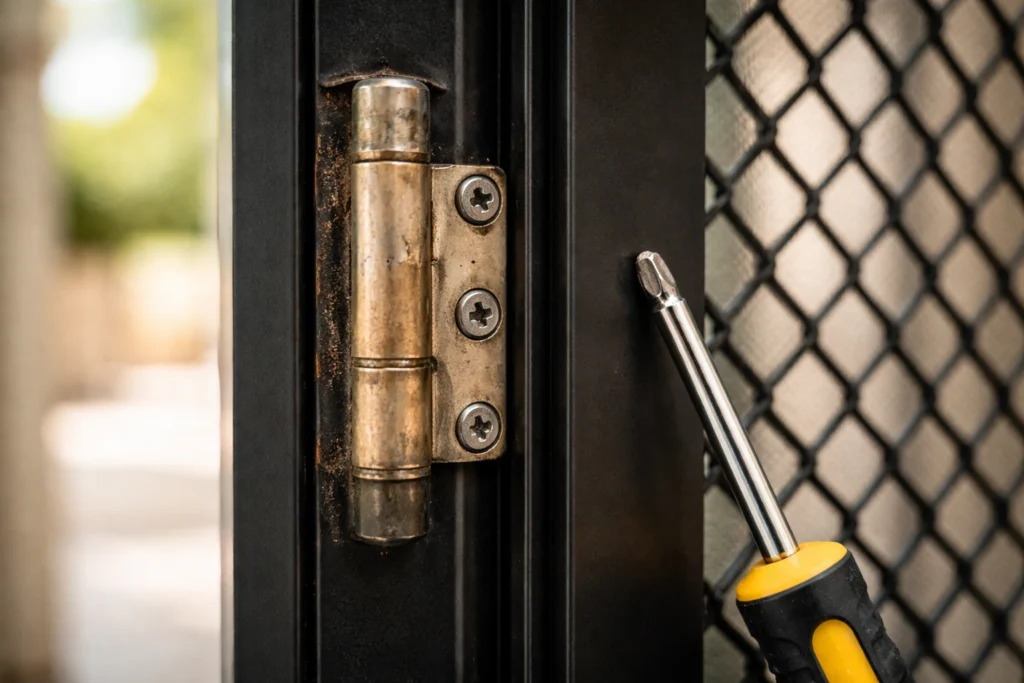
Your door droops slightly on one side when opened always puts stress on the lock. This misalignment also makes your security system work harder than intended. As a result, the lock mechanism wears out faster.
Initially, squeaking starts quietly but indicates metal-on-metal grinding that worsens quickly. The sound often tells you protective coatings have worn through, exposing bare metal to friction damage.
To be more specific, any gap wider than a five-cent coin in your door means your hinges have shifted beyond normal tolerances and need adjustment immediately.
Lubricants like WD-40 often attract dust that gums up hinges worse than leaving them dry. This product works fine for loosening stuck parts, but it’s not designed for ongoing lubrication.
Besides, lithium grease stays put through temperature swings, unlike oil-based products that drip. Through our practical knowledge working with security door maintenance, we’ve seen how lithium-based lubricants maintain their consistency from Brisbane’s humid summers through cooler winter months.
We also served a door in Paddington that kept operating smoothly for eighteen months after one lithium grease application.
Pro tip: Always apply lubricant to the pin shaft, not inside the barrel, where it can collect dust and gum up the lock.
Tightening screws without checking alignment pulls your door out of square permanently. That’s why you need to verify the door sits level before making any adjustments.
Hinge pins also don’t always wear evenly. Over time, the top hinge often loosens first because it carries more of the sideways pressure every time the door opens and closes. Meanwhile, the bottom hinge can stay firm, which throws the alignment off.
Adding shims behind the hinge plates can fix a sagging door without replacing the whole hinge. We’ve used this technique on dozens of installations where minor settling caused alignment issues, and it restores proper operation without the cost of new hardware.
Have you ever noticed your security door behaving differently as seasons change throughout the year? Well, it may be happening because Australia’s weather puts hardware through constant stress.
Here’s what each season does to your door:
This way, monthly inspections catch paint chips before moisture reaches the doors’ bare metal (this isn’t optional anymore). During inspection, don’t forget to check hinges, handles, and frame edges where powder coating wears fastest.
From there, the focus shifts to specific hardware points needing attention during routine checks.
The best part about routine inspections is catching lock and seal problems before failure occurs. Your security door works hard every day, so small issues today may convert into big vulnerabilities when you ignore them.
Now, learn how to inspect the components that keep your door secure:
Your key turns, but the bolt no longer slides properly into the strike plate. It happens when repeated door slams loosen the plate, and the screws slowly back out until the bolt has nothing solid to catch onto.
Sometimes, deadbolts may stick halfway if you slam the door for a long period. It leaves the doors vulnerable without anyone noticing (frankly, that’s the worst kind of security failure). From the inside, the bolt looks locked, but one hard shove can push it open because it was never fully caught.
Remember, compressed weather stripping never bounces back without creating permanent gaps that allow water and air inside. That’s why you might start feeling air coming through near the handle, where the seal has lifted under constant sun exposure.
Brittle rubber seals also often crack during cold snaps and let the insects enter through tiny openings. Beyond that, damaged seals also let moisture creep into the frame, which eventually leads to rust problems you’ll need to address.
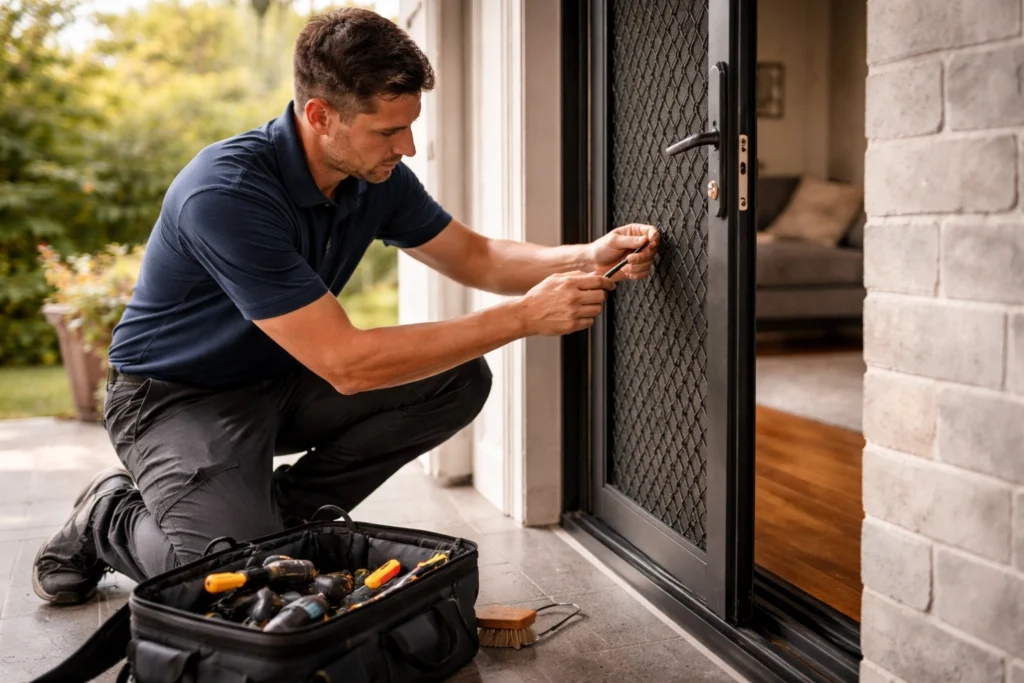
Professional servicing identifies frame alignment issues and wear patterns you cannot detect yourself. They also spot frame misalignment that strains hinges and locks over time, even when doors still open and close without obvious problems. These shifts happen gradually as buildings settle or foundations move slightly.
Besides, the lubricants that professionals use last months longer than hardware store products. So you’re not reapplying spray every few weeks or dealing with sticky buildup that attracts dust and grit (which actually gums up the mechanism worse than leaving it dry).
Most importantly, annual servicing catches deterioration patterns and predicts failures six months ahead. They do it by investigating stress cracks forming around hinge bolts, lock cylinder wear from key misalignment, and mesh tension loosening at the frame edges.
However, most owners overlook these signs until something stops working completely. On the flip side, trained eyes can catch them early enough to schedule repairs during convenient times rather than emergency callouts.
Regular maintenance keeps your door operating smoothly rather than fighting it daily. With this approach, you’ll avoid the frustration of sticky locks or squeaky hinges that make every entry into a wrestling match.
Catching small issues early saves hundreds compared to emergency lock or hinge replacement. Plus, a quick inspection spots problems before they become expensive repairs that disrupt your routine.
Enfant Terrible Shop offers maintenance services and inspections for residential and commercial security doors with 27 years of experience. Contact our team to schedule your first inspection and establish a baseline for future maintenance needs.

A security door protects your home only when every component... Read more →
Door entry accounts for 40.9% of residential burglaries in Australia.... Read more →
Are you struggling to understand the difference between residential and... Read more →
Have you ever walked past a door in your home... Read more →
Measuring a door frame really comes down to three numbers:... Read more →
Our team of qualified professionals lets us provide the highest quality products and services for our customers. We believe in collaboration and innovation. We manufacture security doors following highest standards and ensure that they are robust enough to last many years.