Why Professional Installation Matters for Door Security
Professional door installers bring the technical knowledge needed to keep... Read more →

Home » Door Guide » How to Measure a Door Frame Before Ordering a New Door
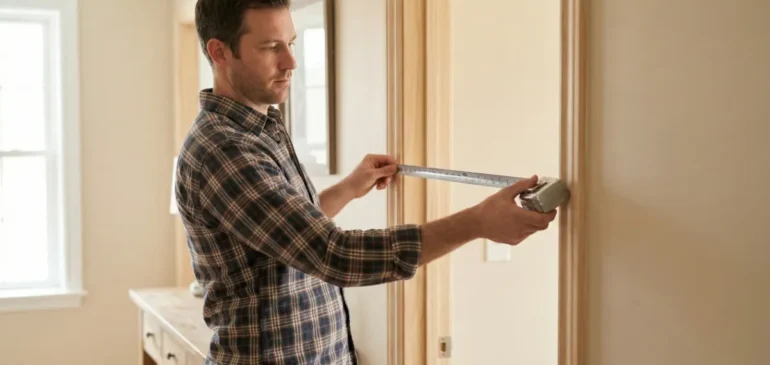
Measuring a door frame really comes down to three numbers: width, height, and jamb depth. When you get these dimensions right, your new door will fit perfectly. And if you have ever measured windows or spaces for furniture, the process will feel familiar.
However, if you don’t measure carefully, you could end up with a door that doesn’t fit, costing time and money. Which is why following a clear method and spending a few minutes measuring will help you get the right door the first time.
In this guide, we’ll explain how to measure a door frame step by step. You’ll also learn common mistakes to avoid and when to call a professional for help.
Let’s start with the basics.
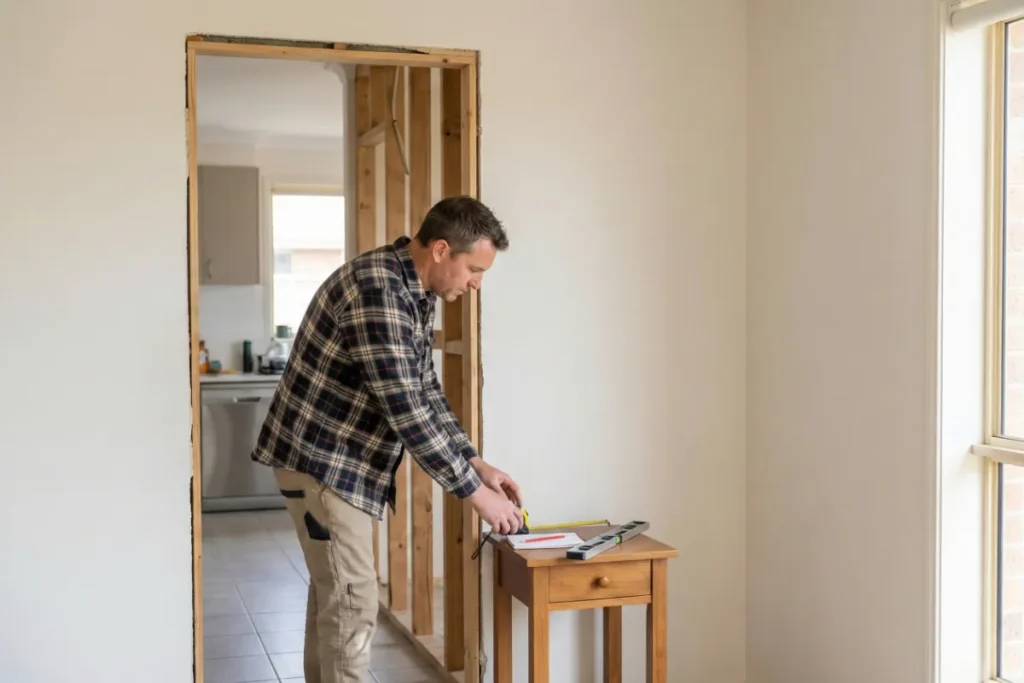
You will need measuring tools like a tape, a pencil, paper, and a clear doorway before you start. While these may not seem that important, skipping the prep leads to unnecessary mistakes.
In fact, we’ve had customers lose weeks waiting for replacement doors. And it surprisingly happens frequently.
So take a few minutes to gather your tools and clear the area. Here’s what you’ll need.
The right tools make this job quick and painless. As mentioned earlier, you only need a measuring tape, pencil, paper, and a straight edge or level.
When it comes to the tape, a retractable steel measuring tape works best because it holds its shape and gives reliable readings.
Also, don’t forget to write down each measurement straight away. That simple habit keeps your numbers organised and helps you avoid mixing them up later when you’re ready to order.
Before you measure anything, clear the doorway completely. This step means removing the existing door, if possible, to get full access to the frame.
At the same time, take off any door seals or decorative trim around the edges. These additions can add extra millimetres to your readings and throw off your final numbers.
And without obstructions in the way, you can trust that your numbers are accurate.
Knowing standard sizes helps you quickly spot if your frame needs a custom door. In most cases, internal doors in Australia are 820mm wide and 2040mm tall as standard.
Keep in mind, though, front doors and fire doors are often wider, typically in the 870mm range or more. These measurements align with the NCC Livable Housing Design Standard guidelines for residential buildings.
After 26 years of installing security doors, we’ve learned that most Australian homes follow these standards. So if your measurements fall outside this range, you may need a custom size or professional advice.
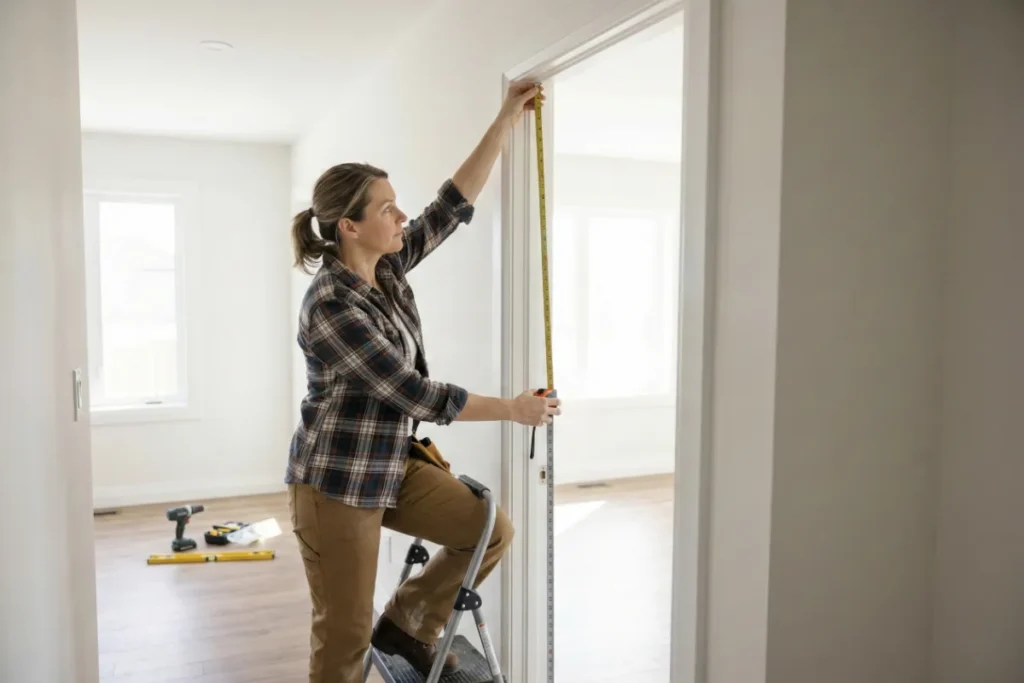
You need three measurements: width, height, and door jamb depth. Together, these numbers give you the full picture of your frame opening.
For best results, measure in three spots and then use the smallest number for your order. This approach accounts for any unevenness in the frame. After all, even small errors of a few millimetres can cause fitting problems later on.
So, grab your tape and start with the width.
Measure the inside of the frame from left to right, not the existing door itself. This gives you the true width of the opening.
Then, take readings at the top, middle, and bottom of the frame. This extra step is important because older homes often have frames that aren’t perfectly even.
Once you have all three numbers, use the smallest one when ordering your new door. In this way, the door fits without jamming or sticking.
The height of the door frame is your next measurement. For this, go from the floor to the inside top of the frame on both sides.
Just like the width, frames aren’t always perfectly even, so check the left side, right side, and centre. Remember, floors can slope, and frames can shift over time, so measuring in multiple spots is worth the extra minute.
After that, you need to record the shortest height measurement. Doing so ensures your new door fits well without scraping or leaving gaps at the top.
You might be wondering, what exactly is a door jamb? Well, it’s the thickness of the wall where the door frame sits inside.
Now, to measure it, go from the front edge of the frame to the back end on both sides. This number tells you how deep your new door frame needs to be.
Otherwise, a mismatched jamb depth can cause installation problems. For instance, if your jamb is too shallow or too deep, the door won’t sit flush with the wall.
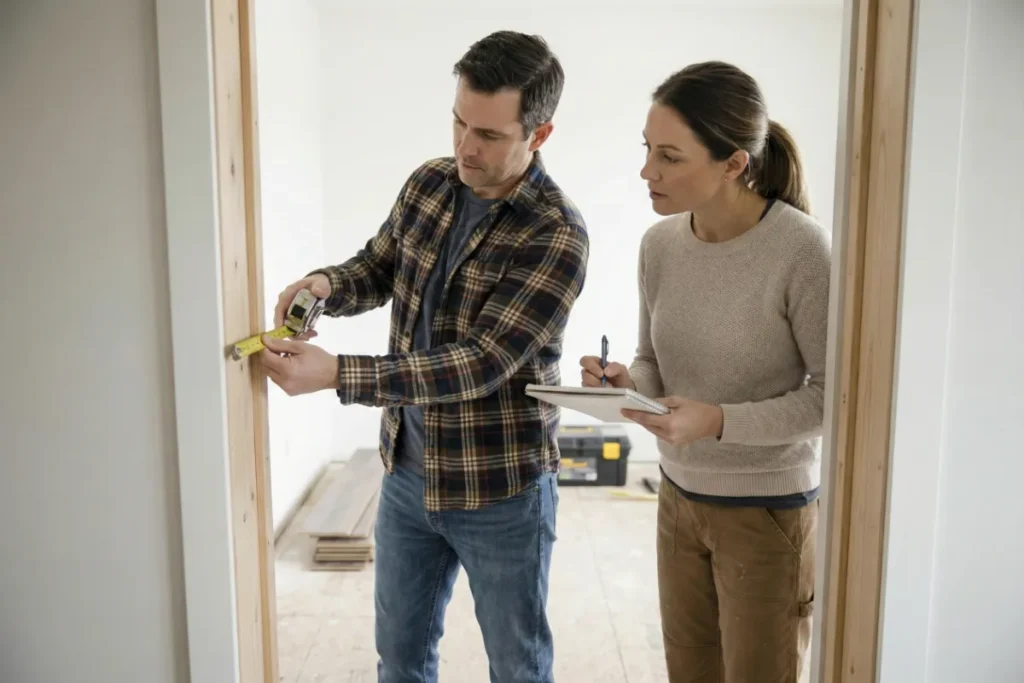
Getting your measurements is one thing, but avoiding common errors is another. Small measuring mistakes can lead to doors that stick, gaps, or won’t close properly. Even a few millimetres off can cause headaches during installation.
Fortunately, double-checking your numbers only takes a couple of minutes. And of course, in some cases, calling a professional is the better choice.
Below, we’ll cover how to avoid the most common mistakes.
A quick recheck can save you from a long delay. Over the years, our team has found that measuring twice on separate days catches most errors.
So, before you place your order, compare your measurements against the supplier’s listed door sizes. This simple step helps you confirm the numbers are correct, and the door will fit.
For extra assurance, ask someone else to measure as well. Because a second pair of eyes can spot mistakes you might have missed.
Double-checking catches number errors, but some mistakes happen before you even pick up the tape. Generally, most measuring errors come from simple oversights. Believe it or not, we’ve seen doors arrive 50mm too wide. Not fun.
For instance, one common error is measuring the existing door instead of the frame. The problem is, the door itself may have been trimmed or adjusted, so always measure the frame opening. Besides that, flooring changes are another thing people forget. If you’re planning new carpet or tiles, factor in the extra height.
Also, avoid rounding up your measurements, as this often leads to oversized doors that won’t fit.
Measuring isn’t always straightforward, and that’s perfectly fine. Regardless, some situations call for expert help. Especially in older homes, frames often aren’t square or plumb. In these cases, a professional measuring service can save you time and money.
Similarly, security doors need precise measurements to ensure they lock and seal properly. So, if you’re unsure at any point, calling an installer is worth it. And it’s better to get it right the first time than deal with costly returns later.
Ordering a new door without proper measurements often leads to delays, extra costs, and frustrating returns. The good news is, these problems are easy to avoid. With the right approach, you can get a door that fits your home perfectly the first time.
This guide covered everything from measuring width, height, and jamb depth to avoiding common mistakes. You also learned when DIY works and when calling a professional makes more sense.
So, ready to bite the bullet? Contact Enfant Terrible today for expert advice or visit our showroom to find the perfect security door for your home.

Professional door installers bring the technical knowledge needed to keep... Read more →
A security door protects your home only when every component... Read more →
Door entry accounts for 40.9% of residential burglaries in Australia.... Read more →
Are you struggling to understand the difference between residential and... Read more →
Have you ever walked past a door in your home... Read more →
Our team of qualified professionals lets us provide the highest quality products and services for our customers. We believe in collaboration and innovation. We manufacture security doors following highest standards and ensure that they are robust enough to last many years.