Residential vs Commercial Security Doors: Key Differences
Are you struggling to understand the difference between residential and... Read more →

Home » Security Doors » Residential vs Commercial Security Doors: Key Differences
Are you struggling to understand the difference between residential and commercial security doors? Well, don’t worry anymore because you’re in the right place.
The choice between these two types of doors affects everything from your upfront costs to long-term maintenance schedules. So, it’s natural to be confused about it.
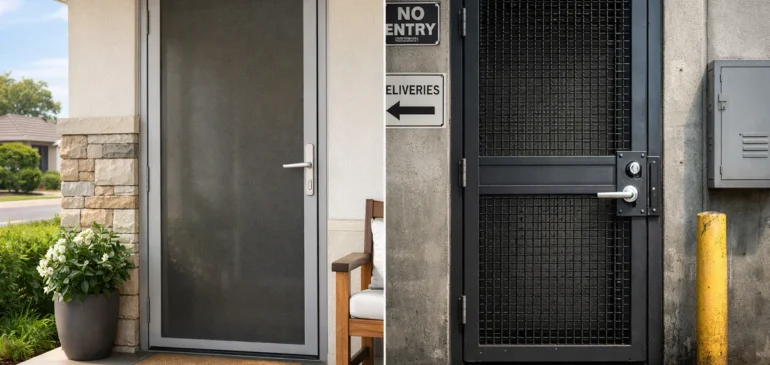
In short, residential options blend home security with insect protection and curb appeal. Meanwhile, commercial solutions need to withstand forced entry attempts and meet strict Australian business standards.
Furthermore, this guide breaks down the practical differences you need to know before spending a cent. And you’ll learn which security screens suit your property type, what protection levels different doors actually provide, and how to avoid overpaying for features you don’t need.
Let’s get into it.
Residential security doors stand apart through their balance of home aesthetics, insect protection, and family-friendly security features.
These doors protect your family without converting your home into a fortress. You also get quality security screens built for everyday Australian living, instead of maximum-security prisons.
Now, let’s have a look at what specific options work best for homes:
Modern security screens combine fine mesh weaving, which blocks mozzies while maintaining airflow and street views. So, you don’t sacrifice ventilation for protection.
Mesh grades vary from standard insect protection to reinforced security-rated options, by resisting cutting and impact. Plus, the weave gets tighter as you move up quality tiers.
Usually, basic screens use 0.9 mm wire diameter while security-rated versions jump to 0.6-1.2 mm or higher. That extra thickness stops knife blades and screwdrivers from penetrating through.
To maintain aesthetics, door frames include powder-coated finishes in multiple colours, matching your existing windows and architectural style. As a result, your new screen doors blend right in without looking like an afterthought bolted onto your home.
Advanced products sit at the premium end for the following reasons:
That’s the protection level you’re paying for with premium materials.
In practice, commercial security needs heavy-duty protection that can handle repeated forced entry attempts.
Basically, commercial premises face higher risk profiles than residential properties. That’s why business owners need systems meeting strict compliance standards for insurance coverage.
Before buying, look for the following options that deliver the protection commercial properties need:
Here’s how these two commercial security solutions compare:
Feature | Roller Shutters | Fixed Screens |
Visibility | Complete barrier when closed | Maintains window shopping appeal |
Best For | Shopfronts with valuable displays | Cafes and retail spaces |
Operation | Manual chain or motorised | Always in place |
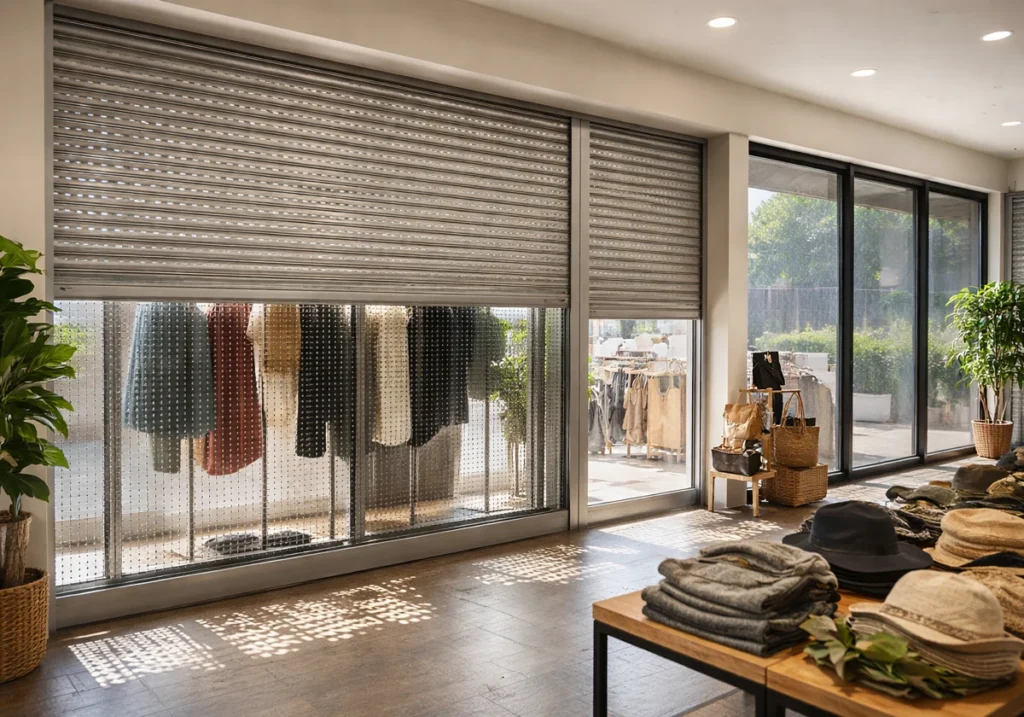
To be more specific, roller shutters provide complete visual barriers when closed, deterring smash-and-grab attempts on shopfronts with valuable displays (that’s a risk few businesses can afford). Meanwhile, fixed commercial screens maintain visibility for window shopping while securing entry points.
There, the operating mechanisms also differ dramatically. Manual chain systems work for occasional use, versus motorised options for daily operation cycles. As a result, commercial roller shutters handle hundreds of open-close cycles weekly without mechanical failure.
According to our investigation, perforated roller shutters allow natural light penetration while closed, reducing daytime lighting costs by 30-40%. We’ve installed these across Melbourne retail spaces and watched power bills drop within the first quarter.
Beyond these, security screens with solar mesh technology block UV radiation, protecting merchandise from fading and reducing cooling expenses. Insulated roller shutter slats also create thermal barriers, beneficial for refrigerated warehouses and temperature-controlled facilities.
This way, the energy-efficient designs pay for themselves within 2-3 years through reduced utility costs.
Residential and commercial security doors differ in material thickness, locking systems, installation complexity, and regulatory requirements.
Sometimes, the gap between these two runs deeper than most realise.
Let’s break down where these differences count most for your property:
The elements that separate residential from commercial solutions:
These are the reasons why commercial security doors cost more upfront.
Residential quotes process quickly, usually within 24-48 hours, with free measure appointments within the week. The team shows up, measures your doors, and you get a price.
Commercial assessments require site surveys examining fire egress requirements, building codes, and existing security infrastructure (and yes, we’ve seen quotes triple after the site survey).
Free quote inclusions differ, too. Residential covers standard installation, while commercial quotes factor in certification costs and compliance documentation.
Frankly, the price gap catches most people off guard, like below:
Quick tip: The more doors you secure, the better your per-unit cost drops.
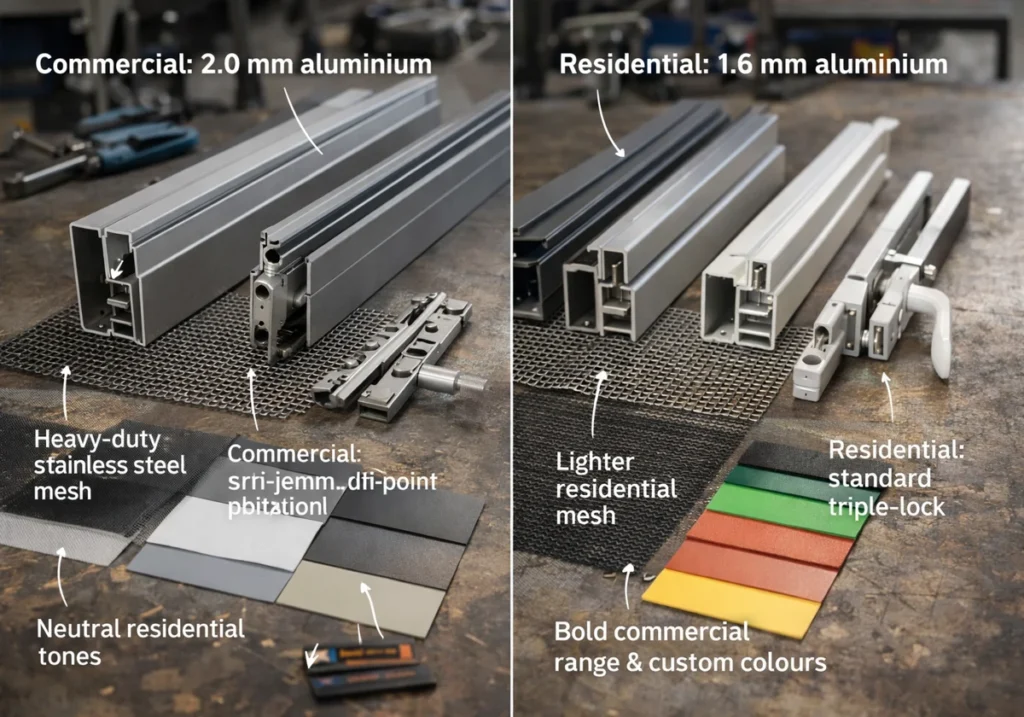
Choose your security door by assessing risk level, checking Australian Standards compliance, and requesting product demonstrations before purchase.
If you don’t know where to start, here are the steps to get this right:
Bottom line: The right security doors protect what counts most without compromising your daily routine.
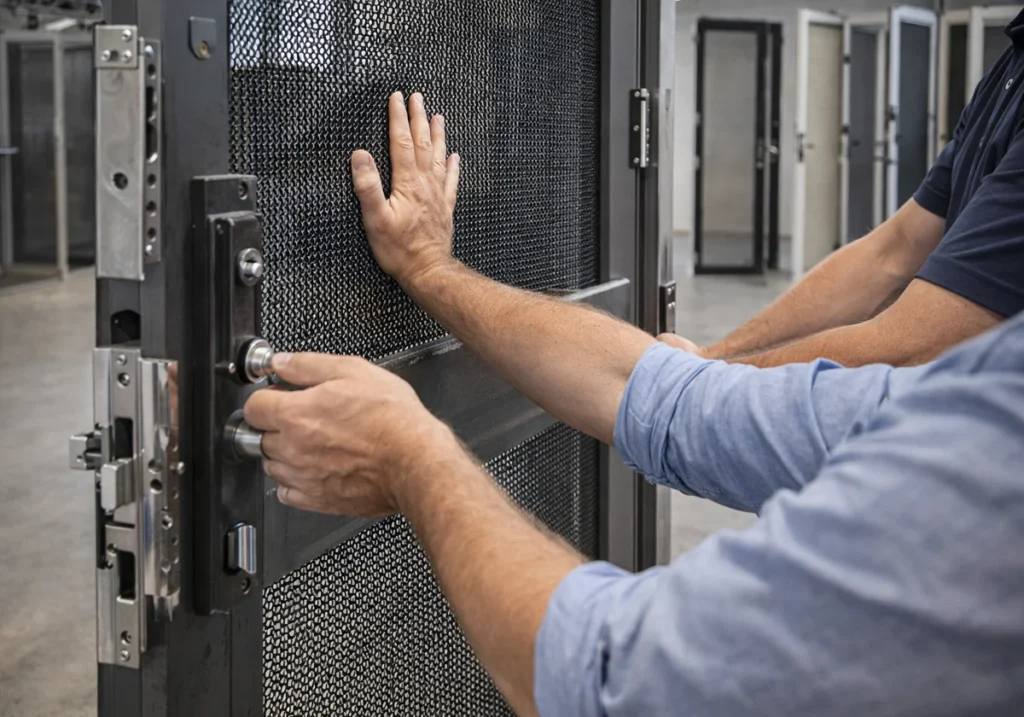
You’ve got the facts now. Residential security doors balance aesthetics with home protection, while commercial solutions deliver heavy-duty security for business premises across Australia.
Quality security screens aren’t just about keeping intruders out. Instead, they provide peace of mind when you lock up at night, knowing your property stays secure. Besides, steel security solutions give you protection without converting your space into a fortress.
Ready to find the right security doors for your home or business? The team at Enfant Terrible Shop can help you to choose solutions according to your property’s needs.
Get your free quote today and see what proper protection looks like in Melbourne or anywhere across Australia.
Are you struggling to understand the difference between residential and... Read more →
Have you ever walked past a door in your home... Read more →
Measuring a door frame really comes down to three numbers:... Read more →
Steel security doors are known for their maximum protection against... Read more →

We’ve all wished we could see who’s at the door... Read more →
Our team of qualified professionals lets us provide the highest quality products and services for our customers. We believe in collaboration and innovation. We manufacture security doors following highest standards and ensure that they are robust enough to last many years.